

Noodles of China: Why every bowl tastes different
From wheat to knife work — learn the basics, explore regional styles, and order a bowl that fits your taste

This guide is part of Chinaoffbeat, a project created by travelers who love slow routes, human stories, and conversations that help you understand China beyond the obvious.
Wheat, weather, and why noodles behave differently
Before you judge a noodle, learn one rule: texture comes from the field, not just the chef. China’s wheat falls into two practical types: winter wheat and spring wheat. Winter wheat grows through a cold season and builds higher protein; when milled it produces dough that yields strong, chewy noodles. Spring wheat matures faster and has lower protein, so noodles made from it tend to soften or fall apart when boiled.
Milling also removes the wheat germ (the oily part) because oils spoil in storage. That means most commercial flour lacks the natural fat and aroma of whole grain. Cooks compensate by adding oils, animal fat, broths, or frying — that’s why so many noodle dishes rely on hot oil, lard, or rich soups to finish the flavor. Put simply: protein gives chew, starch gives fullness, and oil (or fat) gives roundness.
This combination — wheat type plus added fats — explains the broad pattern you’ll see while traveling: Northern noodles are built to withstand long cooking and to absorb flavors, while Southern noodles often stay quicker-cooked and depend on fresh sauces or soups to carry taste.
Northwest and North China — built to chew (pulled, chopped, oil-splashed)
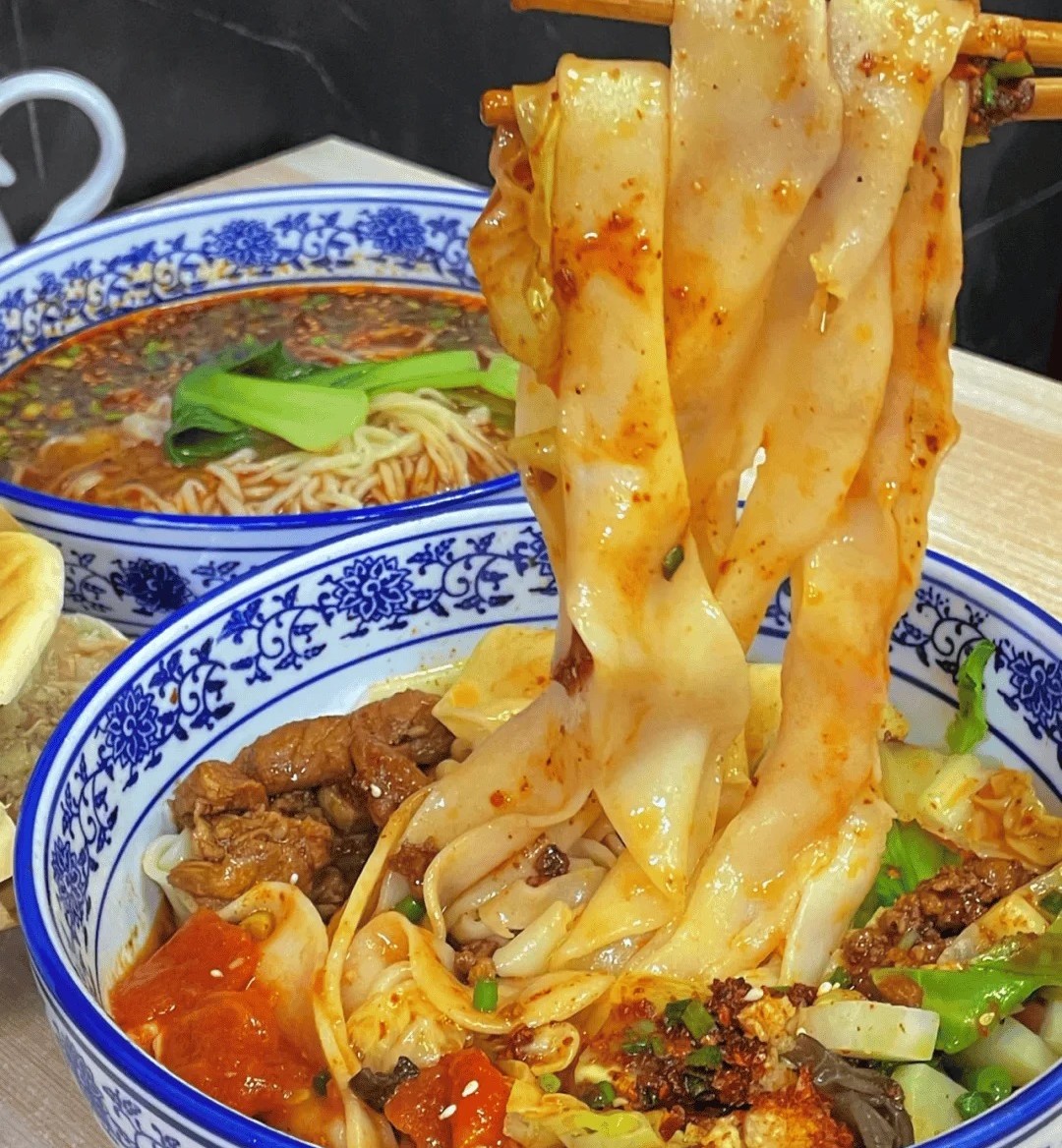
If you walk into a northwest or north China noodle shop, the first thing you’ll notice is texture. Regions that grow high-protein winter wheat — Xinjiang, Shanxi, Shaanxi, parts of Henan — produce noodles that take more chewing and keep their shape in a heavy broth.
Think: Xinjiang lā tiáozi (hand-pulled strips), Shanxi knife-shaved noodles, Shaanxi biang biang and Henan huìmiàn. These noodles can cook with meat and vegetables for a long time without turning to mush. They’re hearty and satisfy a hunger for substance.
Practical tip: if you like chew, ask for the noodles “a little firm” or “cook slightly less.”
Shaanxi region — the hot-oil finishers
In places like Xi’an, the moment when hot oil meets the seasoning is the moment a dish smells like home. Dishes such as liangpi, kalbi, or pickled-topping noodles often use a final pour of smoking oil to wake up spices and aromatics. That hot-oil step adds an immediate perfume and balances the wheat backbone.
How to eat: mix well after the oil pour, and if you don’t like heat, ask for “less chili oil.”
Jiangnan & East China — noodles as a canvas for broth and toppings
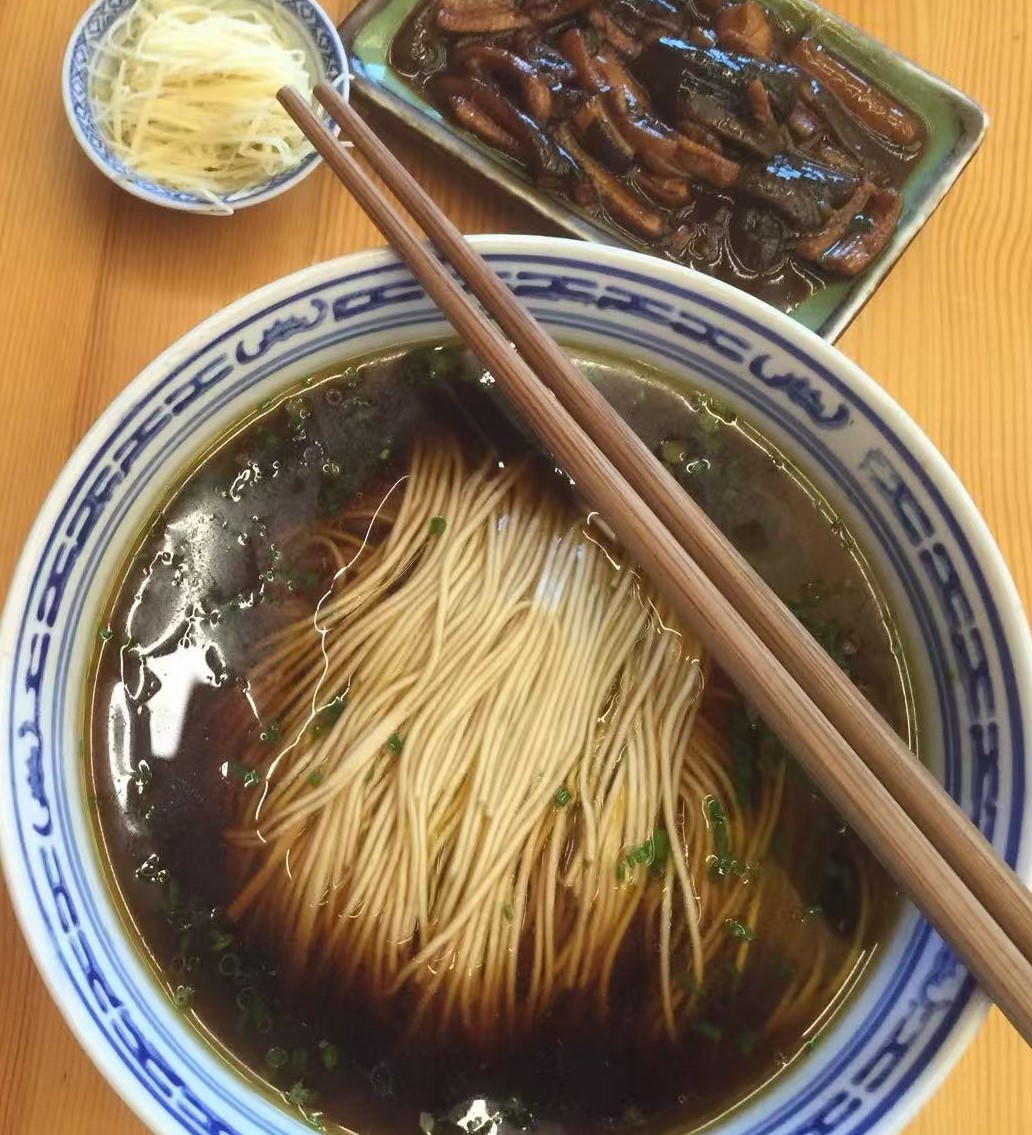
Move east to Jiangsu, Zhejiang, and Shanghai and the noodle game changes: noodles are often blanched quickly and served with separately prepared, delicate toppings or clear broths. Here the noodle’s job is to be a neutral, slightly crisp base while fish, shellfish, or seasonal toppings write the flavor.
Dishes to notice: yellow croaker noodles, eel-noodle soups, and Shanghai scallion oil noodles. Chefs protect the noodle’s light texture; the result is a bowl where broth and garnish are the stars.
Ordering hint: ask “what’s the fresh topping today?” and request the noodle “briefly cooked” if you want some bite left.
Sichuan & Chongqing — bold spice and numbing complexity
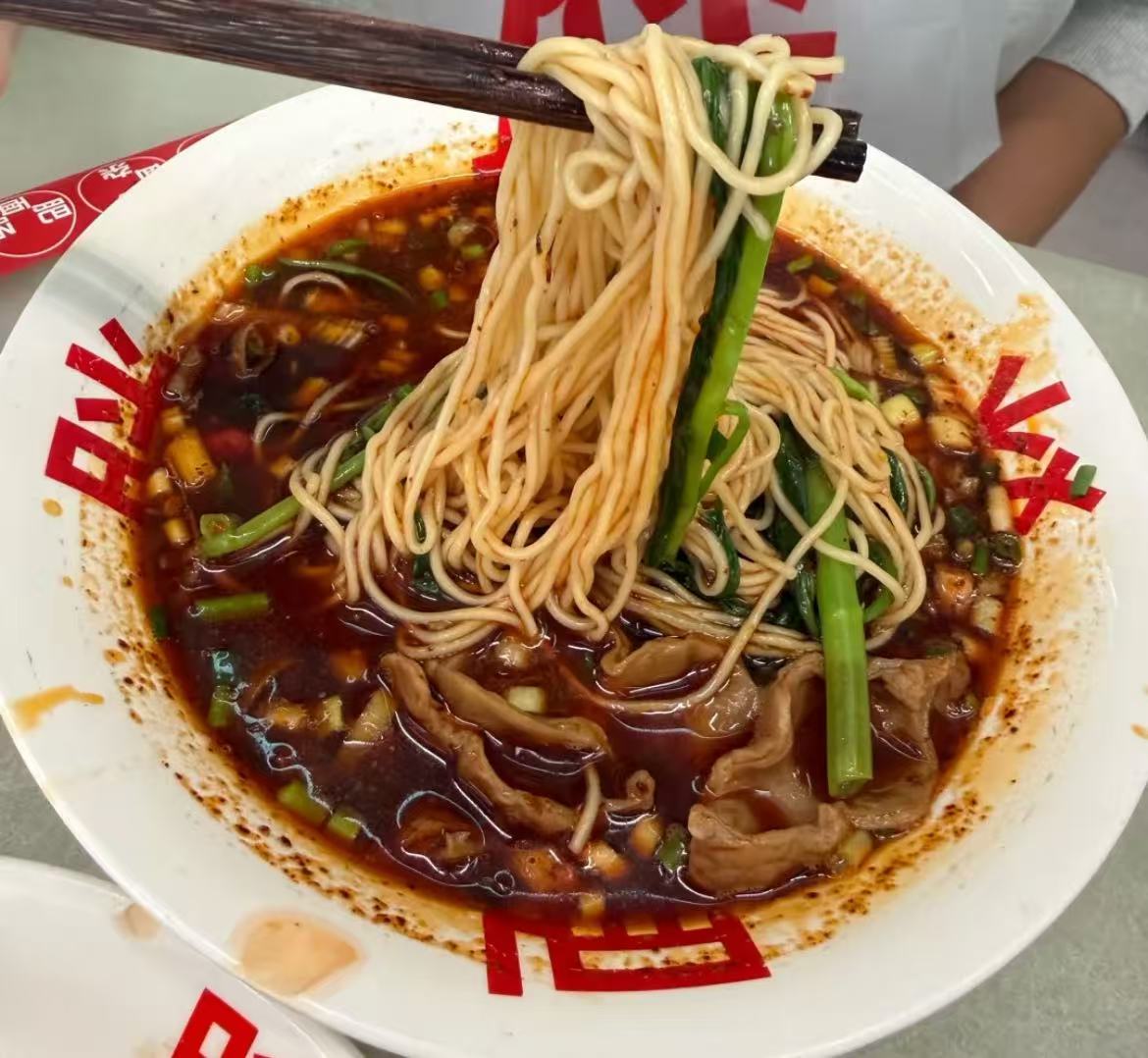
Sichuan noodles are a different language: bright chili, Sichuan pepper, sesame or peanut paste, and a kitchen confident in contrasts. Dan dan noodles, Yibin burning noodles, and Chongqing xiao mian emphasize spice profiles over noodle structure. That doesn’t mean the noodle is unimportant — it’s that the seasoning drives the memory.
Traveler tip: specify spice level (mild, medium, hot) and whether you want the numbing Sichuan pepper sensation.
Guangdong — technique to make softer wheat sing (bamboo-press noodles & wonton noodles)
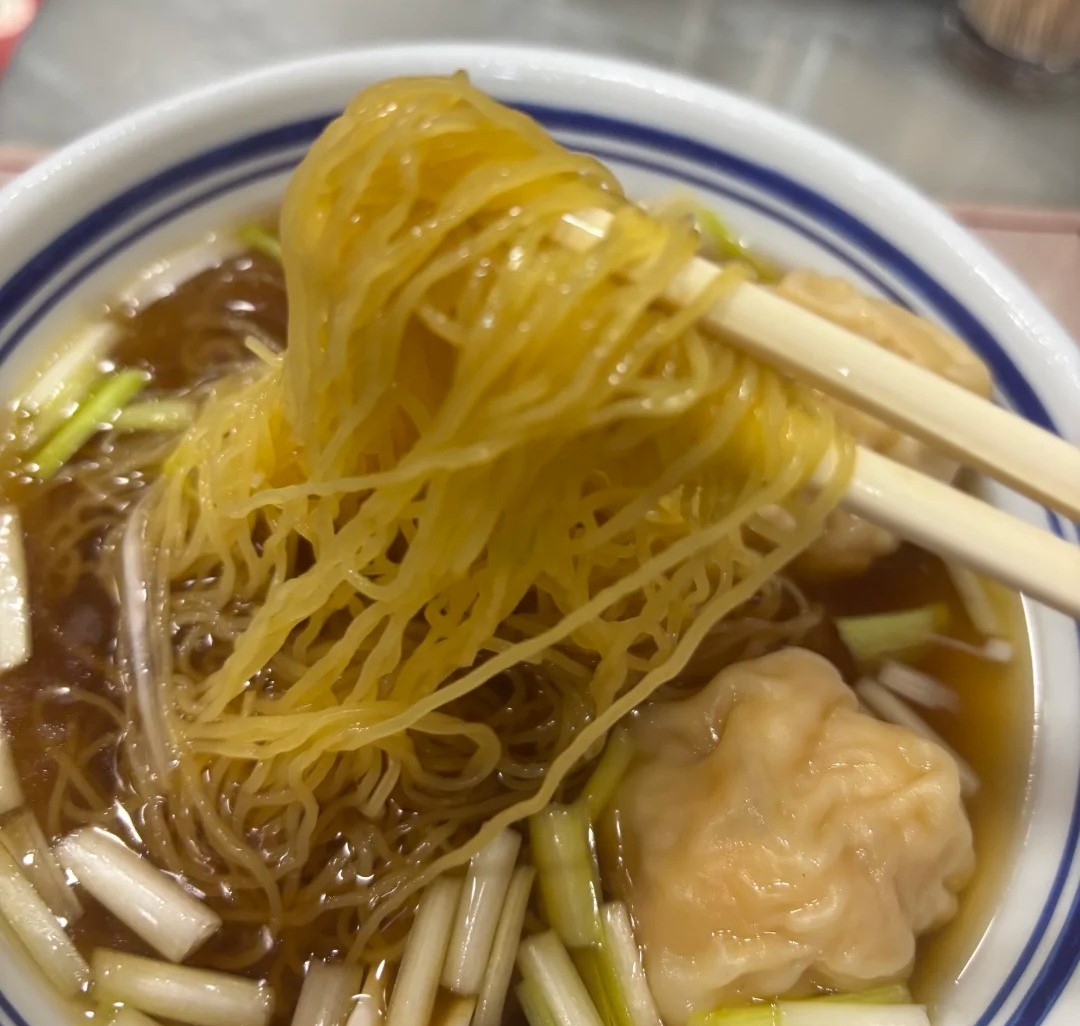
Southern climates produce weaker wheat, so cooks invented techniques to compensate. Bamboo-pressed noodles (zhù shēng miàn) use a wooden press to compress and develop a springy texture; egg is often added to increase protein and elasticity. Cantonese wonton noodles pair thin, elastic noodles with a fragrant broth and delicate shrimp or pork wontons.
Order tip: if you want the Cantonese “springy” bite, say “a bit firmer, please,” and ask to serve immediately so the noodles don’t sit in the broth and soften.
Fujian & Taiwan — very fine noodles and soup-first thinking
Places like Xiamen and southern Fujian love extremely fine noodles — mian xian — cooked until silky and served in rich seafood broths. These strands are not about chew; they’re meant to melt in the mouth and deliver soup flavor with every spoonful.
Best practice: Eat hot. Don’t let the bowl cool; the texture and balance change quickly.
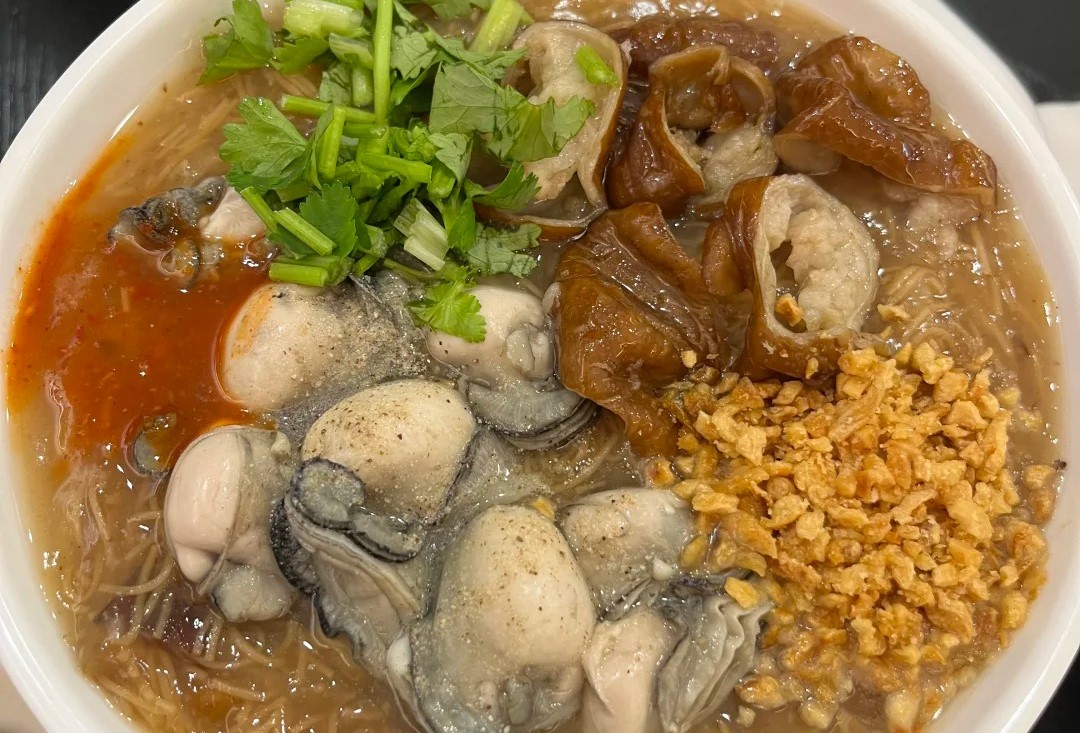
Northeast China — comforting, saucy, home-style noodles
Northeastern China’s noodle bowls often hinge on a thick “gravy” or sauce poured over plain noodles. If the noodles themselves are modest, the flavor comes from the thick, savory topping. These are winter bowls, meant to warm you up.
If you want heartiness, ask for “extra sauce” or “more gravy.”
About rice noodles and why they’re different
A quick note: rice noodles — like Guilin rice noodles, Luosifen (snail rice noodle), or Yunnan’s crossing-the-bridge rice noodles — are a separate family. They are made from rice, not wheat, and follow different rules. This post stays focused on wheat noodles; we can treat rice noodles in a separate guide.
Stop ranking, start tasting
Each bowl answers a local question: what grains grow here, what cooking fuel is available, which proteins are abundant, and how people like to eat. Try a few styles on a trip and let your palate decide. The real travel pleasure is discovering the bowl that fits you — not proving anyone else wrong.
Related blog posts

Best Authentic Peking Duck in Beijing (2025): 4 Classic Restaurants and the History Behind the Dish
Taste Beijing’s signature dish where it all began. Discover the 1,000-year history of Peking Duck and the four restaurants that still roast it the traditional way — crisp skin, tender meat, and centuries of craft.

Chaoshan Food Guide: Why Locals Eat Fish Like Rice & What to Try
A precision-first cuisine of clear broths, thin cuts, and living markets — how Teochew food culture runs on family craft, midnight markets, and small kitchens