

Best Authentic Peking Duck in Beijing (2025): 4 Classic Restaurants and the History Behind the Dish
Taste Beijing’s signature dish where it all began. Discover the 1,000-year history of Peking Duck and the four restaurants that still roast it the traditional way — crisp skin, tender meat, and centuries of craft.

This guide is part of Chinaoffbeat, a project created by travelers who love slow routes, human stories, and conversations that help you understand China beyond the obvious.
The story starts from Fire
The story of Beijing roast duck goes back nearly a thousand years. As early as the Jin and Yuan dynasties, imperial chefs were already roasting wild ducks over open flames. Back then it was known as zhì yā or shāo yā — a dish for royal hunting banquets.
During the Ming dynasty, roast duck stepped into the spotlight. When Emperor Yongle moved the capital from Nanjing to Beijing, he brought north the sealed-oven roasting technique from the southern court, along with the concept of “fattened ducks” — white ducks raised especially for their thick, fatty meat.
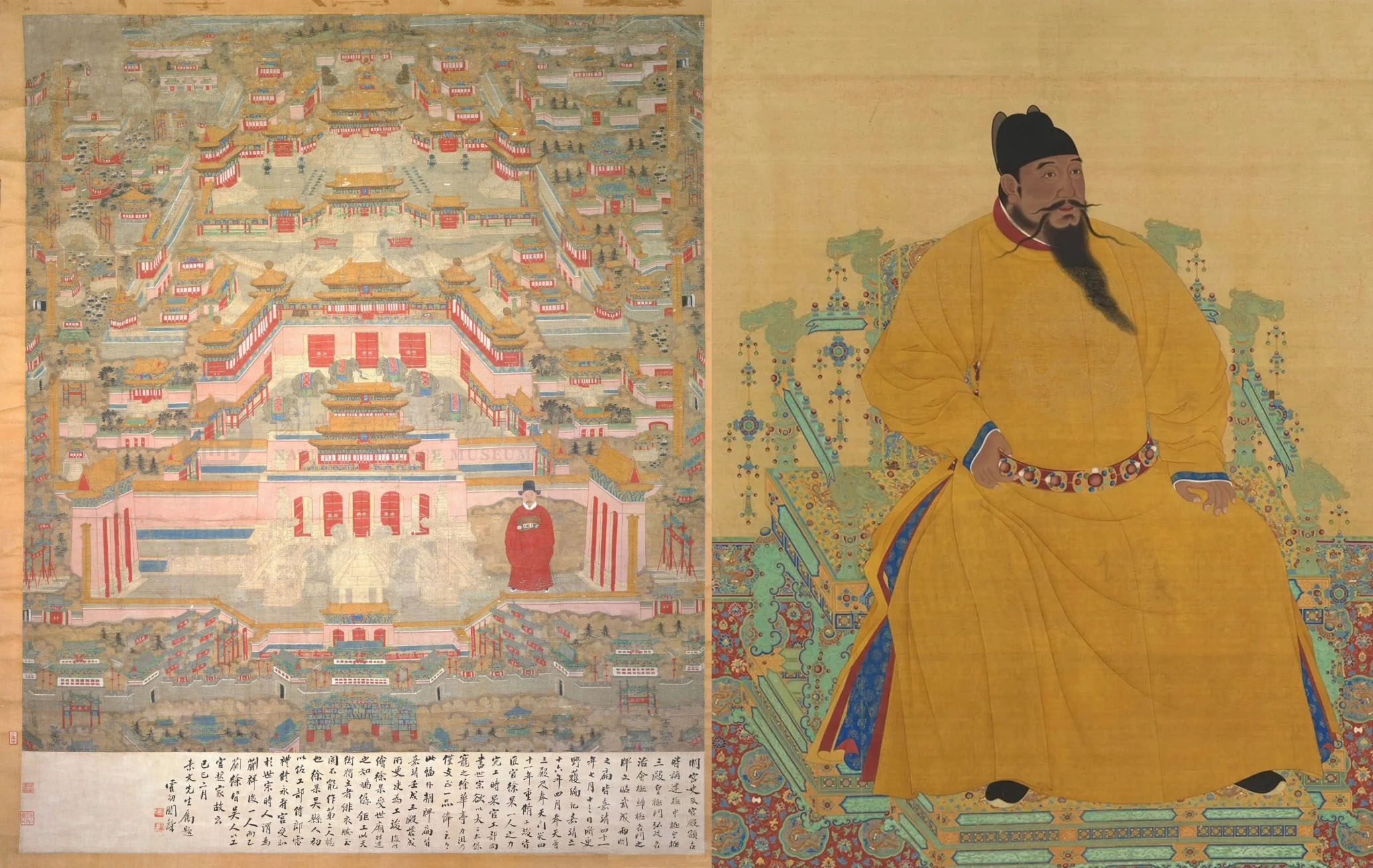
At first, roast duck remained a palace delicacy, cooked in brick ovens that sealed in the heat. Over time, the craft spread beyond the Forbidden City. During the Yongle reign, Bianyifang, Beijing’s first famous duck restaurant, appeared. It perfected the men-lu (sealed oven) style — no open fire, just walls heated by charcoal until the duck turned glossy and crisp.
By the Qing dynasty, roast duck had become the favorite of royals and nobles. Emperor Qianlong reportedly ate it almost daily; Empress Dowager Cixi was obsessed. In 1864, Quanjude opened near Qianmen, pioneering the hanging-oven method, using fruitwood flames to roast the duck suspended over open heat. That golden-red crisp skin is the direct gift of fire. From then on, Beijing developed two distinct schools:
Bianyifang’s sealed-oven method — subtle aroma, thin skin, tender meat.
Quanjude’s hanging-oven method — bright fire color, crisp skin, richer taste.
The Oven and the Knife
Every great duck begins long before it meets fire. Each one goes through a meticulous preparation: a plump Beijing duck is cleaned, water is poured into the cavity to plump it up, air is blown under the skin to separate it from the flesh, then sugar glaze is brushed on and the bird is air-dried until taut.
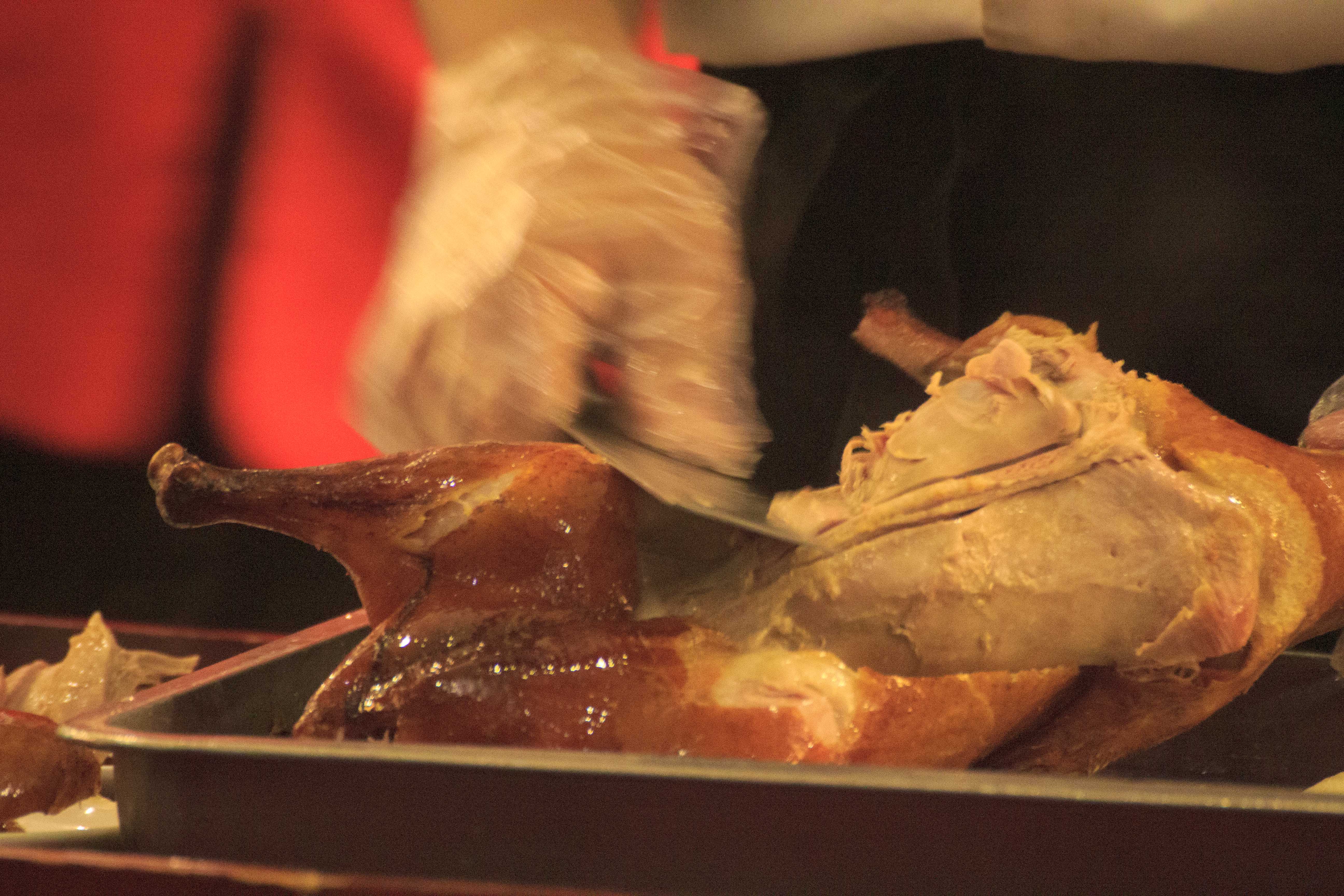
In the oven, the two styles diverge: sealed ovens rely on radiant heat, hanging ovens on direct fruitwood flame. Timing is everything.
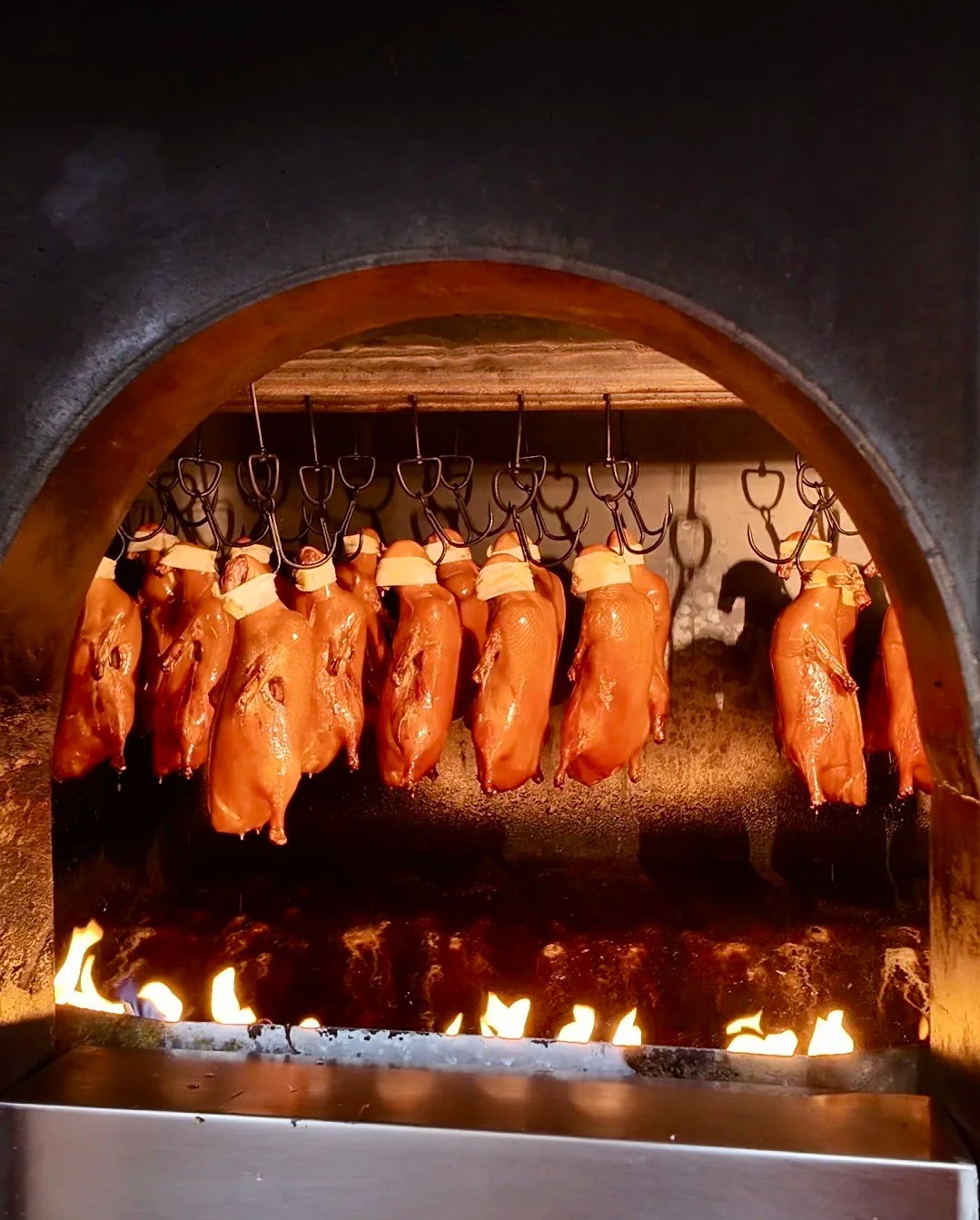
When the duck finally emerges—skin glistening, deep amber, faintly smoky—the real performance begins: the carving. A skilled carver will make around 108 slices, alternating skin and meat so thin you can see light through them. The very first crisp piece, called the “Scholar’s Slice,” marks the duck’s perfect point.
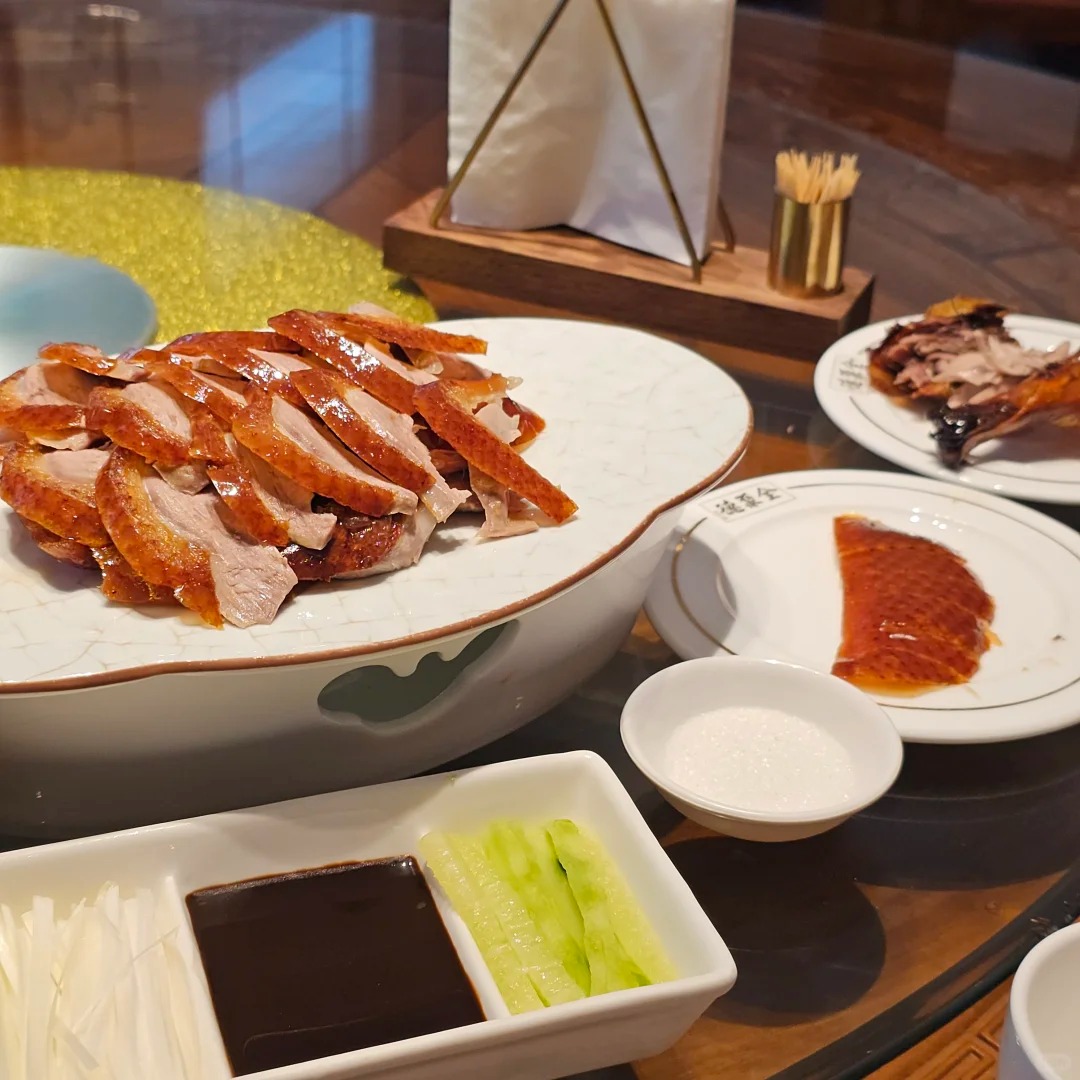
Traditional Beijing duck is served in three stages. First, the wrap: a paper-thin pancake, brushed with sweet bean paste, layered with scallions, cucumber, and duck—sweet, salty, and savory in one bite. Second, the skin with sugar: a shard of crisp skin dipped in sugar, melting instantly on the tongue. Third, the soup: the remaining duck frame boiled into a light broth, the faint fruitwood aroma softening the meal’s finale.
From State Banquet to Street Corner
In the 20th century, roast duck stepped out of the palace and into the world. It became not just a dish, but the flavor of the capital. After the founding of the People’s Republic, it appeared frequently at state banquets — from Nixon’s 1972 visit to modern diplomatic dinners — symbolizing both hospitality and craftsmanship.
Today, you can find roast duck everywhere in Beijing, from five-star hotels to hutong eateries. Old establishments hold to tradition, while newer ones modernize it — lighter glazes, smaller portions, creative toppings — turning “old Beijing flavor” into something global.
What we recommend
China’s culinary map is vast: dim sum in Guangzhou, hotpot in Chengdu, noodles in Xi’an. But for roast duck, nowhere beats Beijing. Even within the city, truly memorable ducks are rare. Many “authentic” hutong spots have turned into tourist traps—dark, greasy, and overpriced. Real Beijing roast duck demands more than taste: it’s about fire, knife, and setting.
Here are four restaurants worth your time — and one you can skip:
Sheng Yong Xing 晟永兴
If locals and longtime expats had to name one place for the best modern roast duck, it would likely be Sheng Yong Xing. Its jujube-wood roasted duck is a masterpiece: skin so crisp it shatters, yet meltingly rich; the aroma a blend of fruitwood and red dates.
The signature pairing—caviar, scallions, and white toast—feels almost decadent. Try one pure slice dipped in sugar for its buttery sweetness, then roll another in a soft pancake with cucumber, scallion, and sweet bean sauce. For a bolder bite, add the house white garlic-chili paste. This is a place for quiet appreciation, not crowds—where the duck turns golden in silence.
Lu Shang Lu 鲁上鲁
Technically a Shandong-style fine-dining restaurant, Lu Shang Lu reimagines the Beijing duck with flair. Its Michelin-starred kitchen serves the stunning cheese-crusted duck: duck wrapped in a paper-thin crispy shell dusted with savory cheese, enclosing tender meat, cucumber, and sweet fruit sauce. One bite and the contrast of crunch, heat, salt, and sweetness is unforgettable.
Another hit is the caviar duck pancake, blending Shandong crepe with Beijing tradition. Lu Shang Lu is about reinvention—it’s not just a duck, it’s a conversation between classic and contemporary Chinese cuisine.
Jingyan · Hanlin Academy
Famous for its “Four Ways of Duck,” Jingyan bridges elegance and playfulness. First course: duck skin with honey—crispy, caramelized, pure pleasure. Second: caviar with duck meat—smooth, savory, lightly salted. Third: the classic wrap—scallion, cucumber, sweet bean sauce, timeless harmony. Fourth: Typhoon-shelter fried duck leg—duck legs stir-fried with garlic crumbs until crisp outside and tender inside.
If Quanjude is history and Sheng Yong Xing is mastery, then Jingyan is a performance—four acts of flavor, perfectly staged.
Siji Minfu 四季民福
For most travelers, Siji Minfu is the easiest way to enjoy an excellent, authentic roast duck without breaking the bank. The skin is fragrant, the meat juicy, the duck-bone soup comforting. The Forbidden City branch is the favorite: dine beside vermilion walls and golden roofs, duck aroma drifting through the view. The only downside: long waits. Book ahead or go off-peak. It’s the safe bet—not mind-blowing, but never disappointing.
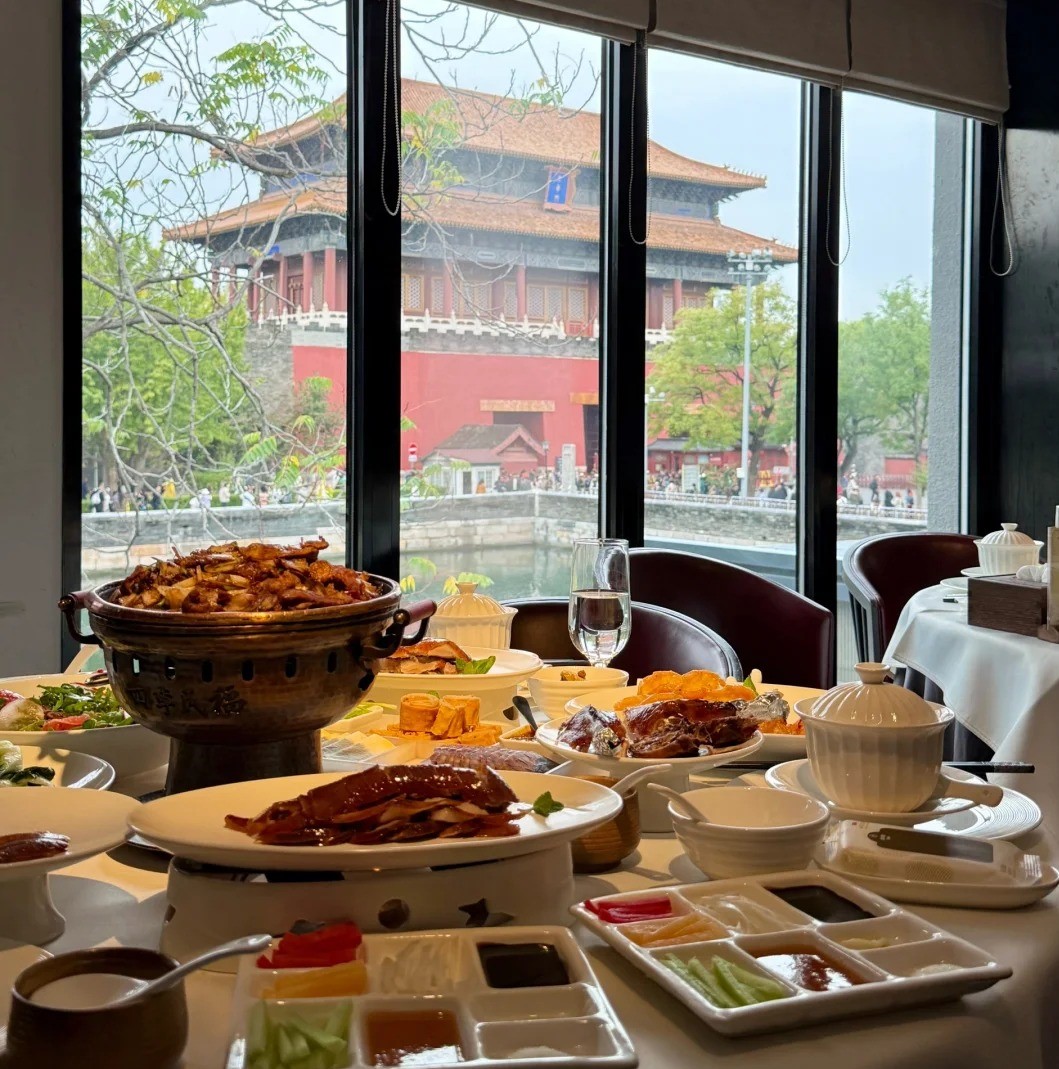
Not Recommended: Li Qun
Hidden in a narrow hutong near Nanluoguxiang, Li Qun was once legendary. Its walls are still covered with faded foreign press clippings—but those days are gone. The setting is greasy, the duck quality poor, the service indifferent. Many foreign visitors leave disillusioned. Real “old Beijing flavor” isn’t grime and nostalgia—it’s precision and honesty. Li Qun lost both.
Related blog posts

Teochew (Chaoshan) Seafood Culture Explained: Why Fish Is a Daily Staple, Not a Luxury
Fish rice explained: what it really is, which fish to try, and how locals eat it

Chaoshan Food Guide: Why Locals Eat Fish Like Rice & What to Try
A precision-first cuisine of clear broths, thin cuts, and living markets — how Teochew food culture runs on family craft, midnight markets, and small kitchens