

China’s Buddhist Grottoes Explained (2025): Longmen, Yungang, Mogao & Maijishan—History, Highlights, and How to Visit
Longmen, Yungang, Mogao, and Maijishan. History, must-see statues and murals, tickets, seasons, and on-site tips.
This guide is part of Chinaoffbeat, a project created by travelers who love slow routes, human stories, and conversations that help you understand China beyond the obvious.
From royal commissions to frontier monasteries, from desert oases to sheer cliff walls, each cave records how China absorbed, re-imagined, and localized Buddhist art. If you want to understand China beyond cities and skylines, grottoes are one of the most moving and honest places to start.
This guide introduces the Four Great Grottoes of China—Longmen, Yungang, Maijishan, and Mogao—each representing a different chapter of Chinese civilization. We’ll walk through their history, stylistic features, what to look for on site, and how to plan a modern trip.
Why Grottoes Matter: A Thousand Years in Stone
Long before imperial palaces reached today’s form, Chinese monks, artisans, and emperors were carving faith into the earth. These caves served as meditation chambers, art academies, royal propaganda walls, and spiritual refuges along the Silk Road. Their murals and sculptures record everything from foreign traders and court fashion to shifting aesthetics—from Indian Gandhara lines to fully matured Tang realism.
Visiting grottoes today feels like stepping into a time capsule where Buddhism, geography, and empire meet. You’re not just looking at statues—you’re standing inside history’s workshop.
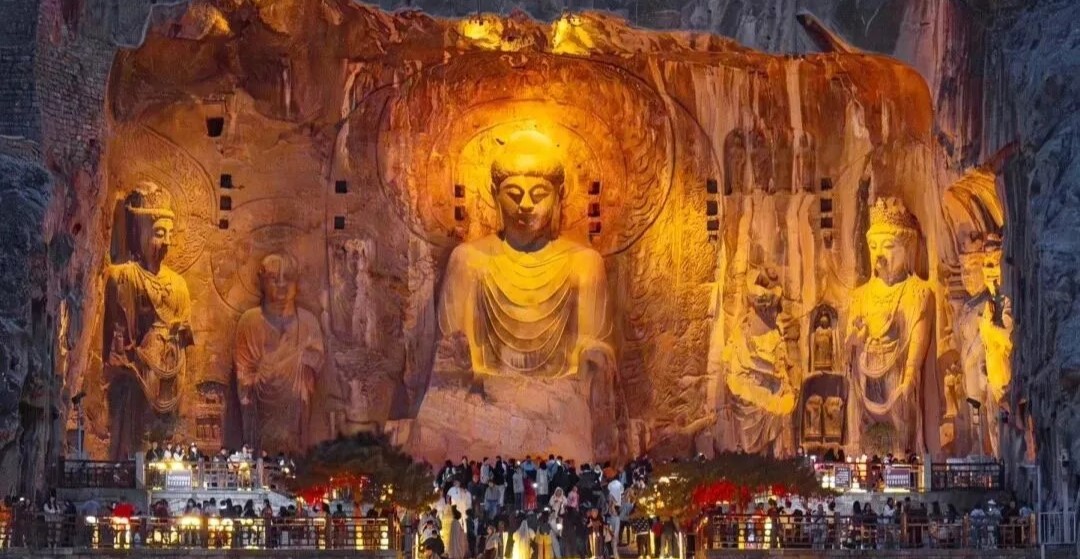
Longmen Grottoes — Luoyang, Henan
Royal grandeur, artistic maturity, and China’s most refined stone carving.
Timeline: Begun in the Northern Wei, flourishing through the Tang to Qing—about 1,400 years of continuous creation. Scale: 2,345 niches and over 110,000 statues.
Why is it worth your time:
Longmen is the most “imperial” of all grottoes. When the Northern Wei relocated their capital to Luoyang, they brought their royal workshop with them, giving Longmen access to funding, the empire’s best sculptors, and the political need to express authority through Buddhist imagery. By the Tang dynasty, Longmen’s style reached an unmatched maturity—full, soft modeling, confident proportions, and serene facial expressions.
What to look for
卢舍那大佛 (Fengxian Temple Vairocana) — the face that defines Chinese grotto art: calm, balanced, almost human.
Tang-style drapery — flowing lines and natural folds.
High-relief guardians — muscular, dynamic, deeply carved.
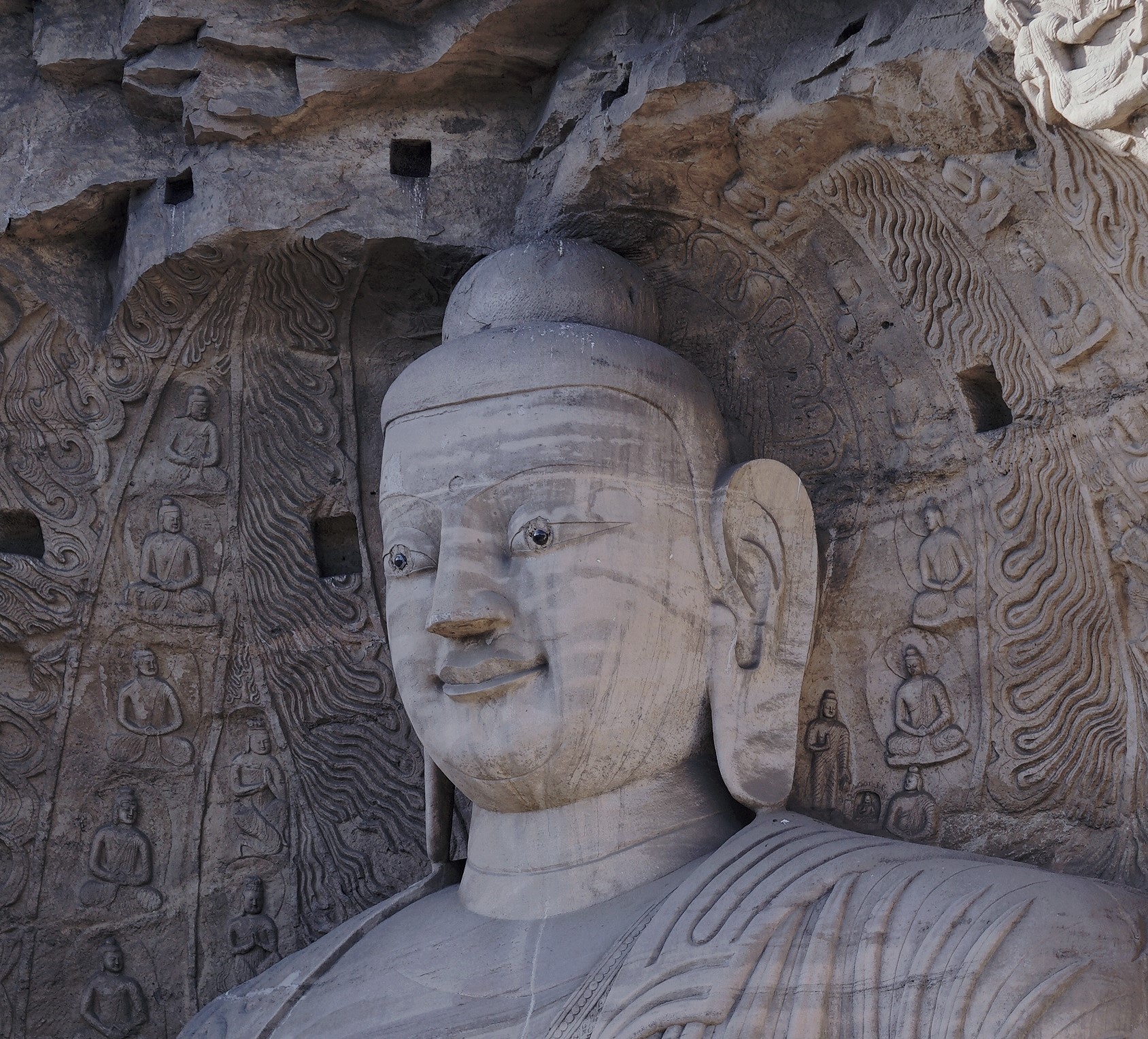
Yungang Grottoes — Datong, Shanxi
The first royal mega-project and the birthplace of China’s Buddhist sculpture tradition.
Timeline: Started in early Northern Wei and developed for about 150 years through the Tang. Scale: 45 major caves, 59,000 statues.
Why it is worth your time:
Yungang marks the moment Buddhism became an imperial project. The Northern Wei rulers—originally nomadic—embraced Buddhism as a unifying ideology. They forged an art style that blended Central Asian influences with new Chinese forms. The five massive seated Buddhas symbolize five emperors, a political statement as much as a religious one.
What to look for
Five Grand Buddha Caves — monumental, square-shouldered, with strong Gandharan features.
Music Caves — musicians, dancers, and celestial performances all carved in detail.
Remnant pigments — tiny patches of original reds, blues, and gold remind you these caves were once brilliantly colored.
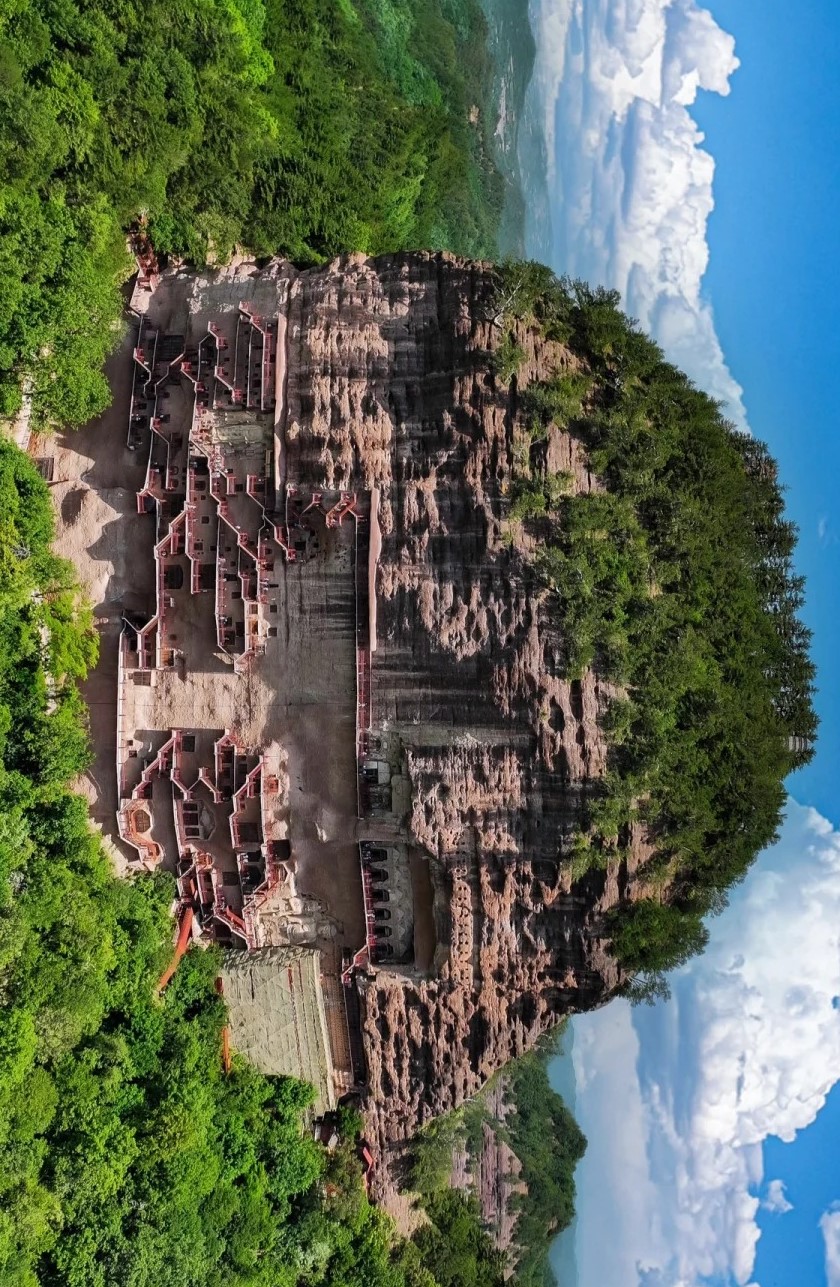
Maijishan Grottoes — Tianshui, Gansu
A cliff of suspended walkways and China’s most human, emotional sculptures.
Timeline: Begun in the Later Qin (4th century) and continuously developed for 1,600+ years. Scale: 221 caves, 7,000+ clay and stone sculptures.
Why it is worth your time:
Maijishan is known as the “Eastern Sculpture Gallery” for its lifelike, highly expressive clay figures. Unlike the stone-cut Buddhas of Longmen and Yungang, Maijishan leans toward naturalism and personality—gentle smiles, slight tilts of the head, and everyday human warmth. The walkways along sheer cliffs create one of China’s most dramatic grotto experiences.
What to look for
Cave 133 — the famous “Little Novice Monk,” “Sakyamuni and His Disciples,” and expressive narrative reliefs.
Cliff-side stairs — open-air walkways hugging the mountain, offering breathtaking views.
Clay sculpture texture — softer lines, more intimate expressions.
Mogao Caves (Dunhuang) — Gansu
The Silk Road time capsule and the world’s largest Buddhist mural collection.
Timeline: Founded in Former Qin (4th century) and active for about 1,000 years. Scale: 735 caves, 45,000 m² of murals, 2,400 sculptures, five Tang–Song wooden facades.
Why it is worth your time:
Mogao is the most complete visual archive of what ancient China looked like. Murals show caravans, foreign ambassadors, Tang court dress, Buddhist cosmology, desert geography, and everyday life. Cave shapes evolved over centuries—square meditation rooms, tall preaching halls, dome-roofed sanctuaries. Mogao is also home to the legendary Library Cave, one of the world’s most significant manuscript discoveries.
What to look for
Flying Apsaras (Feitian) — dynamic, airy figures that became icons of Chinese art.
Tang murals — confident lines, saturated color, and narrative scenes.
Digital Dome Theater — a modern introduction before guided cave entry.
Related blog posts

China’s FOMO Traps: 10 Places You’ll Regret Visiting at the Wrong Time
Plan smarter: the peak dates, the crowd patterns, and simple playbooks to see China’s icons without the misery.

China’s Peak Holiday Seasons —Why You Should Avoid Them
Plan around China’s domestic holidays. Learn which peak seasons to avoid—crowds, price hikes, sold-out trains—and when to travel off-peak.