

Best Museums to Visit in China — Updated 2025
Six must-visit city museums for history lovers — National Museum of China, Shaanxi, Henan, Nanjing, Hubei & Shanghai (highlights, tickets, what to see)

This guide is part of Chinaoffbeat, a project created by travelers who love slow routes, human stories, and conversations that help you understand China beyond the obvious.
Tourist checklists favor spectacle. These museums give you time to connect objects to arguments: how ritual legitimized power, how a regional elite expressed taste, how music and metallurgy communicated authority. If your goal is a travel experience that deepens your understanding of China rather than just fills your photo album, these six should be your core syllabus.
Why these six
Three selection rules guided this list: (1) museums that hold objects central to China’s narrative; (2) located in major cities (easy travel planning); (3) offer depth beyond “one photo and done.” Expect archaeological anchors, signature treasures and well-thought exhibits that invite you to read history from artifacts.
1. National Museum of China — Beijing
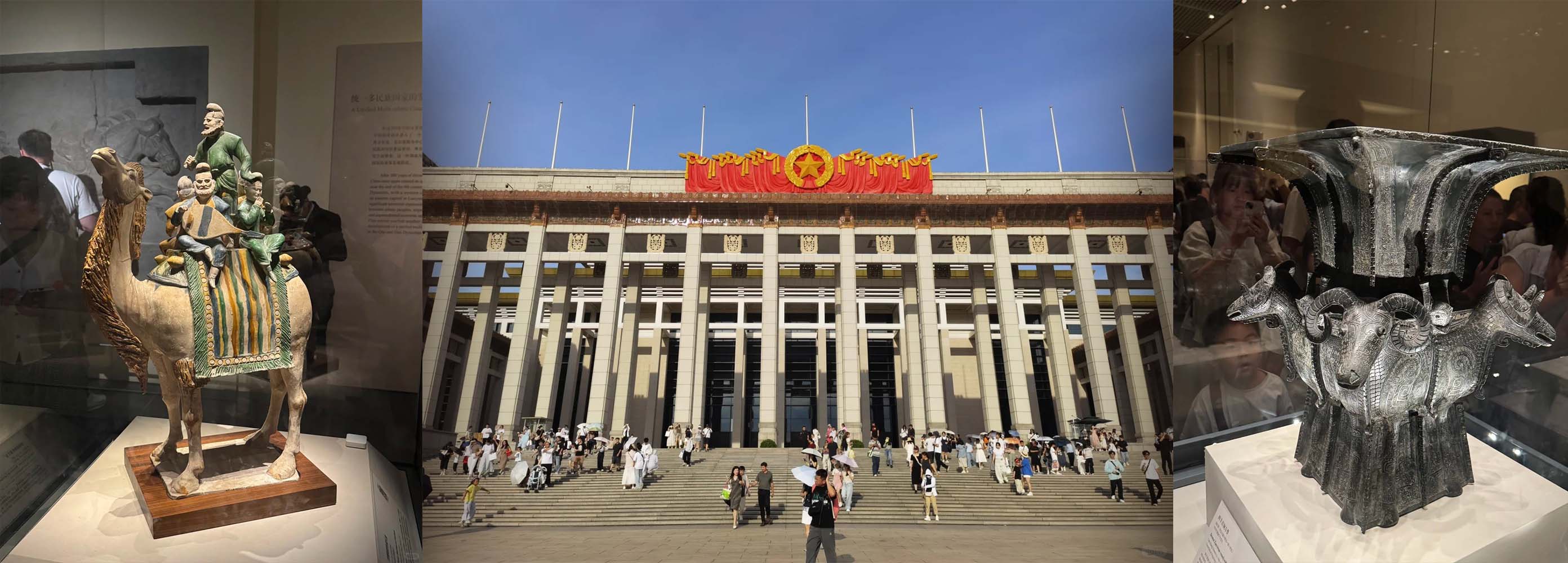
Why go: The National Museum is the country’s public narrative in object form. If the Forbidden City is theater — staged court life and imperial architecture — the National Museum is the archive: archaeology, craft, revolutions, and state-level storytelling across millennia.
What to look for (concrete): Peking Man contexts, Neolithic ceramics, rite bronzes from the Bronze Age, Han dynasty tomb artifacts, Tang period sculpture and costume displays, plus rotating special exhibitions that borrow heavily from provincial finds and international loans.
Added perspective from the field: Many of the bronze and large scale pieces you’d expect to find across provincial museums are consolidated here in exhibitions that emphasize continuity — how ritual bronzes, burial practices and later literati arts form a through-line in Chinese history.
Practical tips: Entry is free but requires online reservation; allow at least three hours. Prioritize the archaeology/bronze galleries and whatever the current special exhibition is. If you want palace spaces, split your day: National Museum in the morning; Palace Museum (Forbidden City) in the afternoon.
2. Shaanxi History Museum — Xi’an
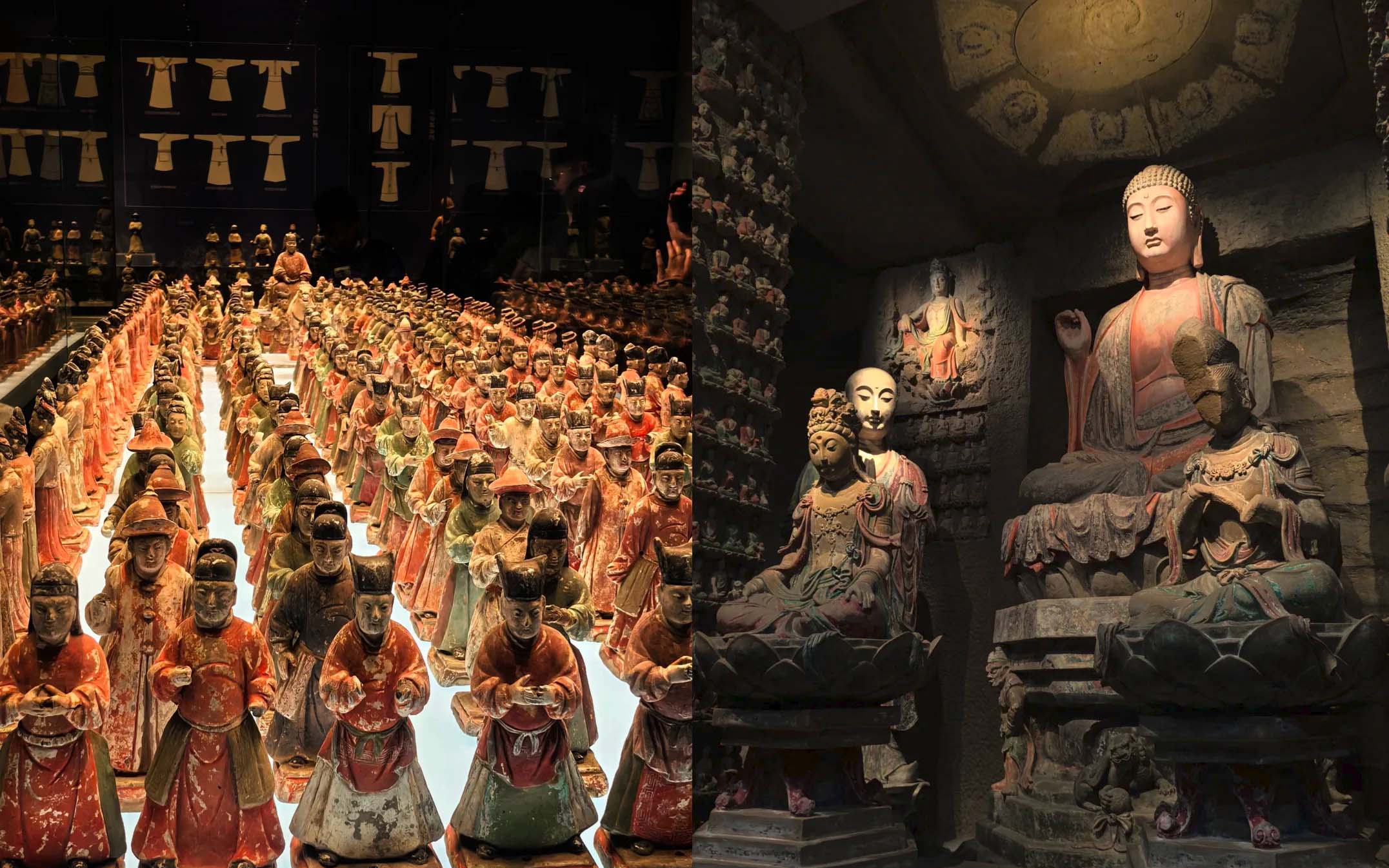
Why go: Xi’an is the ancient imperial terminus for many chapters of Chinese history. Shaanxi History Museum complements nearby monuments (city wall, Terracotta Army) by giving context — funerary objects, Tang cosmopolitan luxury, material culture of an imperial capital.
What to look for: Tang dynasty tomb horses and figurines, Buddhist statuary and murals, painted tiles and textiles, and curated sequences that make it easy to read changes in ritual and daily life from Han through Tang.
Why it rewards the attentive: The museum arranges objects to show social continuities and urban transformations. It’s less about spectacle and more about nuance: the everyday objects that illuminate how imperial capitals functioned.
Practical tips: Book ahead on busy dates. Combine with an early morning bike on the city wall or a food walk in the Muslim Quarter.
3. Henan Museum — Zhengzhou
Why go: Henan is the cradle region for many formative elements of Chinese civilization — early capitals, oracle bones, ritual bronzes. The Henan Museum gathers those formative objects and presents the archaeological story of state formation.
What to look for: Shang and Zhou ritual bronzes, oracle bone fragments (inscriptions that reflect the earliest Chinese script), and exhibition sequences that show the rise of ritual and political authority.
From the field: Even when a museum is temporarily closed for renovation, the energy around Henan’s collections is visible — rescue exhibitions and satellite displays make sure the core finds stay public. If you can, time your visit when the main galleries are open: these objects anchor the “making of China” story.
Practical tips: The museum’s galleries have been upgraded in recent years; aim for 2–3 hours. Zhengzhou is a high-speed rail hub.
4. Nanjing Museum — Nanjing
Why go: This is where scale meets scholarship. The Nanjing Museum’s historical lineage (it began as the National Central Museum) and its curatorial breadth make it one of China’s most persuasive civic museums. It’s not just a provincial museum — it carries the voice of an imperial city that has been capital multiple times.
What makes it unique — concrete highlights from your references:
The museum’s scale: a campus of multiple buildings with a timeline approach that moves from prehistory to modernity.
A particularly strong set of collections tied to the Jiangnan region: ceramics, scholar’s objects, and textile works that show elite taste and literati culture.
Personal artifacts of note: the first fully restored Han dynasty “silver-threaded jade burial suit” (an important restoration/curation milestone) is associated with the museum’s holdings and exhibitions in the past — an example of the kinds of rare, technically demanding objects that the Nanjing Museum safeguards.
Why Nanjing impresses: The museum grounds and galleries feel “imperial” in scope — it matches the city’s history (six dynasties, ten capitals) and offers a coherent, grand narrative that few provincial museums can equal.
Practical tips: Nanjing is ideal for a slow museum visit. Allow 3+ hours and, if possible, take a local guided tour to help link artifacts to the city’s historical layers (Ming Xiaoling, presidential palaces, etc.).
5. Hubei Provincial Museum — Wuhan
Why go: For musical bronzes and the theatricality of object performance, Hubei is a standout. The museum houses the Zenghouyi tomb finds (notably the set of chime bells) and a suite of Warring States and later artifacts that feel both technical and spectacular.
Must-see objects:
The Zenghouyi (Marquis of Zeng) chime bells — a set of tuned bells that are at once archaeological treasures and musical instruments. Their preservation, scale and the reconstructions/demos make them uniquely immersive.
The Goujian Sword (the famous Yue King sword) — a signature national treasure, razor-sharp after millennia and an object that crystallizes metallurgical mastery.
The “Sleeping Tiger” Qin bamboo slips and other epigraphic finds that highlight administrative and funerary practice.
Why the museum is engaging: Hubei stages objects with excavation context and multimedia that help non-specialists understand what a bell set was for (ritual, music, court performance) and why such objects mattered politically and ritually.
Practical tips: Check for bell recitals or audiovisual demonstrations; those events add an aural dimension you won’t forget. Combine the museum with a riverside walk or a visit to local historic sites in Wuhan.
6. Shanghai Museum — Shanghai
Why go: The Shanghai Museum is a model for how to present ancient objects with modern museum design. Galleries are elegant, labels are clear, and the collection is wide and artful — especially strong in bronzes, jades, ceramics and calligraphy.
Concrete highlights and provenance notes from your references:
The museum’s decision to publish a “hundred top treasures” catalogue reflects both collection depth and curatorial ambition. Its holdings include exceptional bronzes and calligraphy (notably material on the level of some national treasures) and a major body of privately donated pieces.
The story of private collectors (a notable example: the Pan family) and wartime preservation of bronzes underlines Shanghai’s history as a commercial and cultural magnet — much of the museum’s richness arrived via private collectors, wartime gifts, and civic mobilization.
Why it works for visitors: Shanghai Museum combines high curatorial standards with visitor-friendly presentation — good English signage, logical gallery flow, and expertly designed highlight shows make it an efficient and rewarding stop.
Practical tips: It’s in People’s Square — pair it with a Shanghai city walk. Reserve ahead for peak times and check the museum shop for high-quality catalogues.
Related blog posts

Guge Kingdom — Lost Kingdom of Western Tibet
Guge (Tholing & Tsaparang) — origins, legends, murals and practical visiting guide for Ngari, Tibet, China

Go Eat Guangdong: Where to Taste Guangzhou, Chaoshan and Shunde’s Best
Taste Guangdong Now — Essential food guide to Guangzhou, Chaoshan & Shunde. Find the top dishes, best restaurants, street-food tips, and where to eat like a local.