

How to Find Authentic Restaurants in China: A Practical Guide for Travelers
From download to booking: step-by-step instructions for using Dianping (大众点评) to pick the right city, switch to English, filter by cuisine and ratings to eat where locals actually go.

This guide is part of Chinaoffbeat, a project created by travelers who love slow routes, human stories, and conversations that help you understand China beyond the obvious.
When you open your phone to find your first meal in China, Dianping is the app you should not overlook. Part of the Meituan ecosystem, Dianping has evolved into a local life super-app that covers restaurant reviews, delivery, hotels and other services. Its reach is comparable to how indispensable WeChat, Alipay, and Trip.com are in daily Chinese life. Think of Dianping as China’s mix of Yelp and Google Maps: it catalogs nearly every restaurant you can imagine, plus countless local spots and travel-related services.
First step: download the app, set your city, and switch language
Start by downloading “大众点评 / Dianping” from the App Store or Google Play. Open the app, tap the city selector in the top-left, and choose the city you want to search — we’ll use Beijing as an example. On the homepage, select the Restaurant or Food category and you’ll see local restaurant lists and rankings similar to what you’re used to on Yelp or Google Maps. Note that Dianping displays most business information in Chinese by default — most merchants in China do not use English — but the app provides an on-screen translate button that toggles English translation for business pages and user reviews. The translation isn’t perfect, but it’s good enough to make informed choices quickly.

Use neighborhood filters as your primary selector
City neighborhoods matter. In many Chinese cities, different districts have distinct dining styles, price ranges and regular customers. In Dianping, first choose the district (for example Beijing’s Chaoyang, Dongcheng or Fengtai), then narrow by subway station or landmark. This method keeps you away from tourist-oriented restaurants clustered around major attractions and points you toward places frequented by local office workers, families and residents. The app’s local rankings and location-based searches are made for this exact purpose.
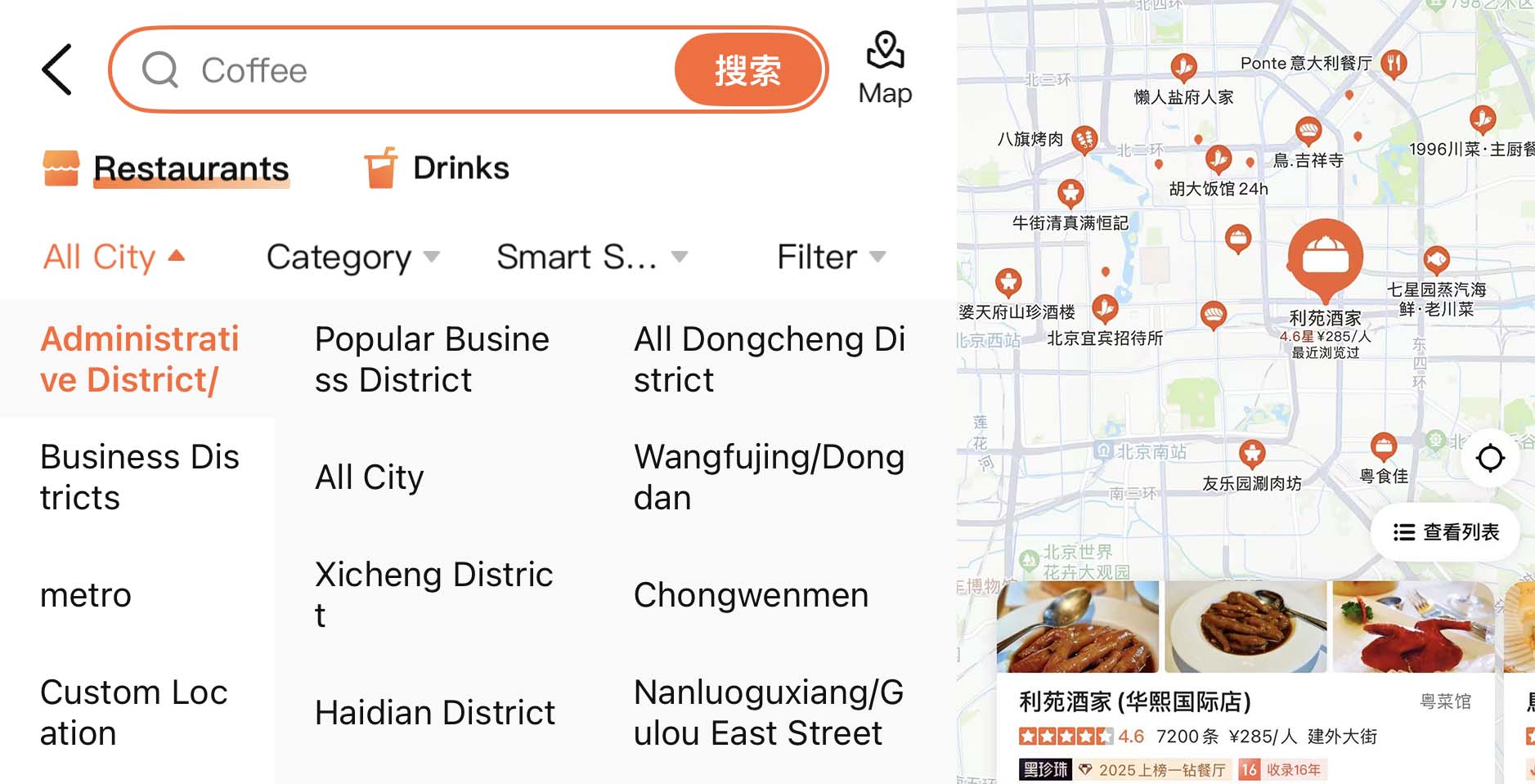
Let cuisine filters define which kind of “authentic” you want
Dianping’s cuisine filters are granular. You’ll find broad categories — Sichuan, Cantonese, Shanghai — and far more specific options: regional snacks, seafood, home-style cooking, private kitchens, as well as Japanese, Korean and Western restaurants. Decide whether you want a neighborhood family-style meal or a regional specialty, then use the filtered menus and keywords to locate places that match. High-quality local shops often list signature dishes in their descriptions; those notes are visible in both listing results and the shop’s detail page.
Understand ratings and review volume — learn to read “flavor” scores
Beyond an overall score, Dianping breaks down ratings into categories like taste, environment, and service. As a rule of thumb, prioritize restaurants with scores of 4.2 and above. Scores under 4.0 typically indicate a higher risk of disappointment. Also, pay attention to the number and recency of reviews. A high score with very few reviews is less trustworthy than a solid score backed by many recent, photo-equipped comments. Treat ratings as a strong signal, not an absolute guarantee — factors like sample size, local demographic habits, and occasional promotional practices can skew results.
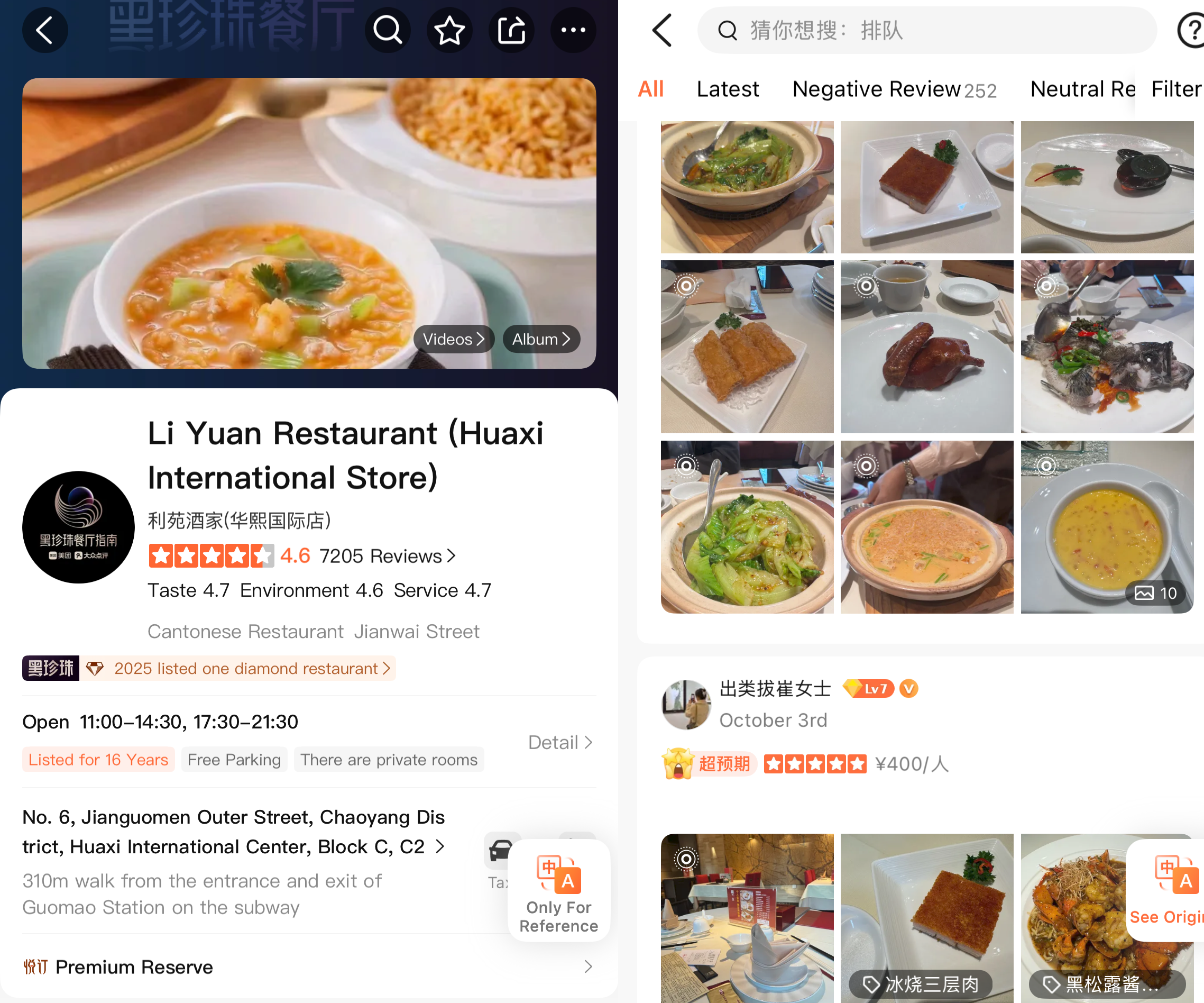
Prioritize user photos and recent comments over polished menu copy
User-uploaded photos show portion sizes, plating, and real presentation. Recent comments often include practical ordering tips — “must-order: twice-cooked pork, good for two” or “ask for the garlic sauce” — which are far more actionable than official descriptions. When reading reviews, focus on photo posts and look for context like “weekday lunch” or “weekend dinner” to understand who normally eats there and when it gets busy.
Price expectations and timing matter
In China’s first-tier cities like Beijing and Shanghai, average per-person spending at a standard sit-down restaurant is generally above ¥100 RMB. Restaurants with nicer ambience or costly ingredients (seafood, premium beef, imported items, or Western-style fine dining) often push per-person costs over ¥200. Always combine the per-person indicator with the score and photos to decide if a place is worth it. Timing matters, too: many street-food vendors and lunchtime counters sell out during midday when office workers flock in, while some signature shops heat up later in the afternoon or evening. Match your visit time with the local crowd to find the genuine experience.
Food safety (brief practical note)
China has a multi-level food safety regulatory system that, on paper, provides comprehensive standards. In practice, execution varies across regions and among millions of food businesses. Hygiene and food-handling practices are not uniform nationwide, so prioritize busy, visibly clean restaurants that attract local customers. Avoid tourist-heavy stalls or areas where foreigners congregate, and be cautious with items that aren’t fully cooked or are meant to be eaten raw, such as certain raw seafood or undercooked cold dishes. Gastrointestinal upset or foodborne illness can derail a carefully planned trip — and it’s unfortunately not that rare. In a country where you can go from a ¥10 street snack to a ¥1,000-per-person Michelin tasting, there are many choices — and many risks — so look at foot traffic and real user photos to lower the odds.
How to find authentic fine dining and luxury experiences
China’s high-end dining scene has shifted toward provenance and storytelling: many top restaurants emphasize ingredient sourcing, chef backgrounds, and a narrative-driven dining experience. To find luxury dining that locals respect, verify two things: whether the place is recommended by professional food writers or local critics, and whether the booking and communication channels are mature. Many high-end spots accept online reservations and are reachable via English-friendly channels or hotel concierge services. If direct English booking isn’t available, ask your hotel concierge or a local guide (or use a service like Viazen) to secure a reservation. For luxury dining, also check whether the restaurant offers a tasting menu or private room options.
Visit: https://guide.michelin.com/en for information on Michelin Restaurants in Mainland China
Related blog posts

Taste of Shanghai: Best Food to Try in Shanghai
A traveler’s guide to Shanghai cuisine — seafood seasonality, classic snacks, modern twists, and where to taste them.

Best Authentic Peking Duck in Beijing (2025): 4 Classic Restaurants and the History Behind the Dish
Taste Beijing’s signature dish where it all began. Discover the 1,000-year history of Peking Duck and the four restaurants that still roast it the traditional way — crisp skin, tender meat, and centuries of craft.