

Chongqing Food Map: Hotpot, Noodles & Night Markets—Plan Your Eats
Trace Chongqing food history: hotpot’s dockside roots, xiaomian’s rise, Huguang migration, treaty-port years—and where to try each dish today.

This guide is part of Chinaoffbeat, a project created by travelers who love slow routes, human stories, and conversations that help you understand China beyond the obvious.
Many visitors' first impression of Chongqing is that “people sound like they’re arguing.” Then comes the punchline: the food feels that way too—fiery. Compared with Chengdu’s gentle elegance or Zigong’s sharp, savory edge, Chongqing often arrives as big oil, big numbing, big heat—red oil rolling, wok-hei roaring. But if you think that’s all there is, you’re missing the deeper layers. In a flavor world built from hotpot, xiaomian (Chongqing noodles), zhacai (preserved mustard stem), glutinous rice cakes, pork brain, potatoes, wontons, blood curd, grilled fish and chicken with pork intestine, this seemingly rough, even “internet-famous,” riverport city hides real finesse and a long historical thread.
The Starting Point: How Hotpot Rose from the Riverbank
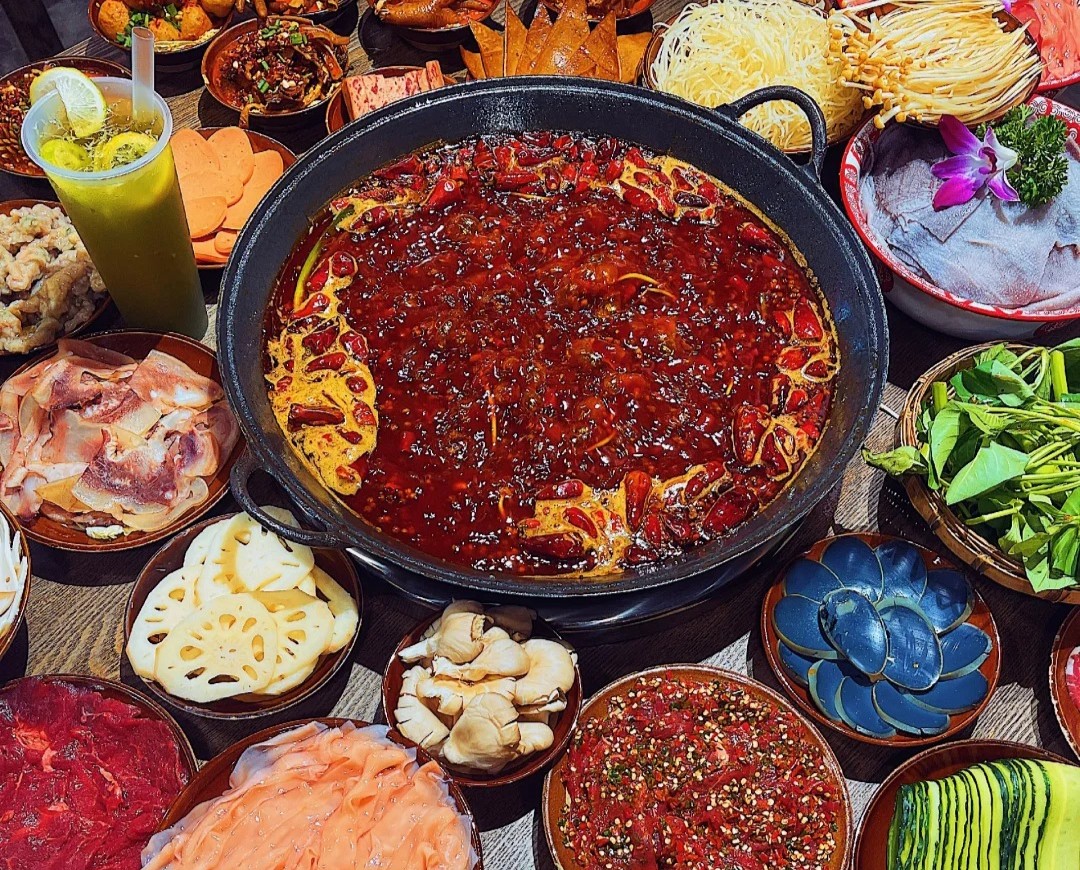
Chongqing hotpot didn’t appear out of thin air. It grew from the daily lives of river laborers: cold, damp work on the banks, heavy physical exertion, and the need to feed a crew quickly. A shared, seething pot made sense—fast, communal, efficient—so the nine-grid pot and the half-and-half “yuanyang” pot emerged as social tools as much as cookware.

The red broth is not just “spicy”: it’s the numbing lift of Sichuan peppercorn, the depth of beef tallow, and a signature aroma shaped by each restaurant’s base stock. Hotpot became a mirror of the city’s character—direct, exuberant, and designed for eating shoulder to shoulder, sweating and laughing together.
The Technical Side of Flavor: The Math of Numbing, Heat, and Aroma
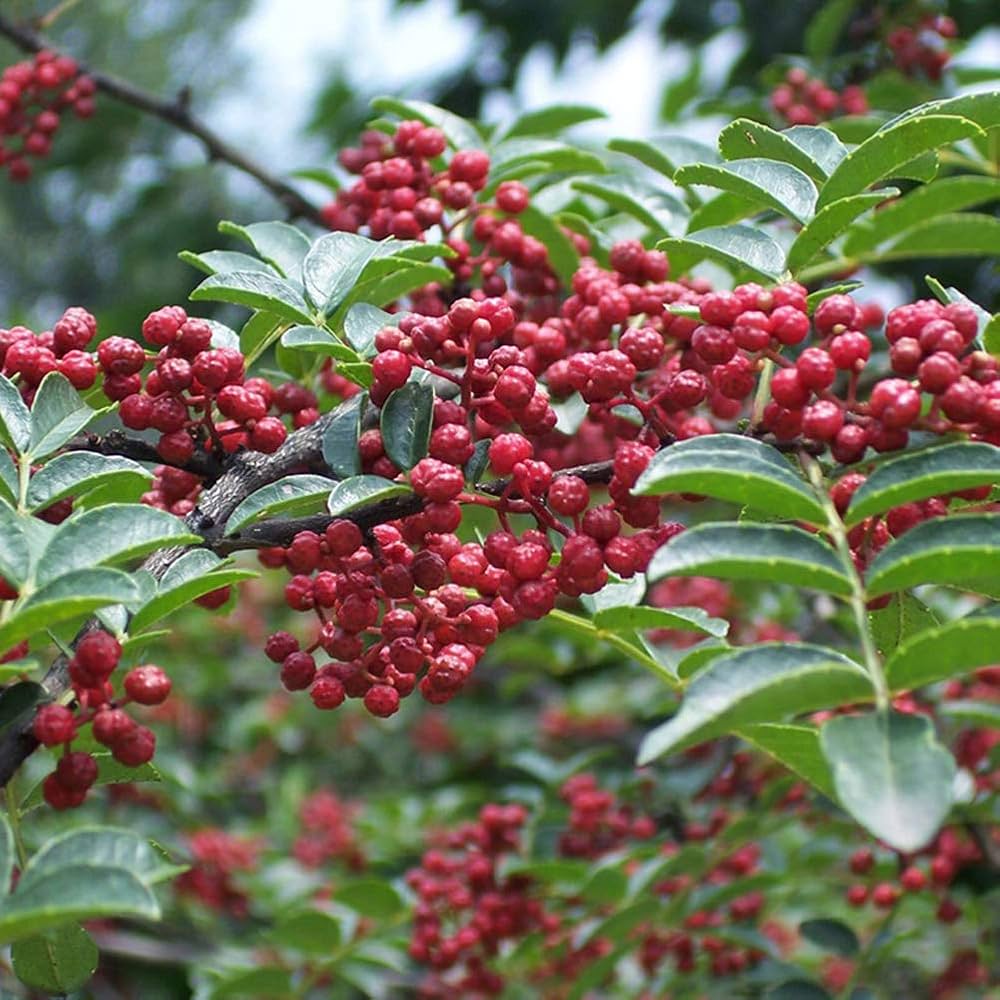
“Málà” looks simple on the surface but runs deep in craft. Peppercorns bring tongue-tingle and floral notes; chiles supply heat and color; beef fat and hot oil carry and amplify aroma. Different chiles play different roles—Erjingtiao for fragrance, facing-heaven chiles for heat, Qixing for both heat and color. Underneath that is a chemistry of capsaicinoids and heat management: intensity, rise and fall, and length of finish all vary with ratios and timing. Veterans even time their visits to catch the moment a kitchen finishes frying fresh chile oil; the fragrance is unmistakably fuller. To those unaccustomed to heat, spice can feel like pure burn. At a Chongqing table, it’s more like coffee or wine: a layered flavor language that builds mood and memory.
Turning Ingredients into “Chongqing” with Chilly Oil
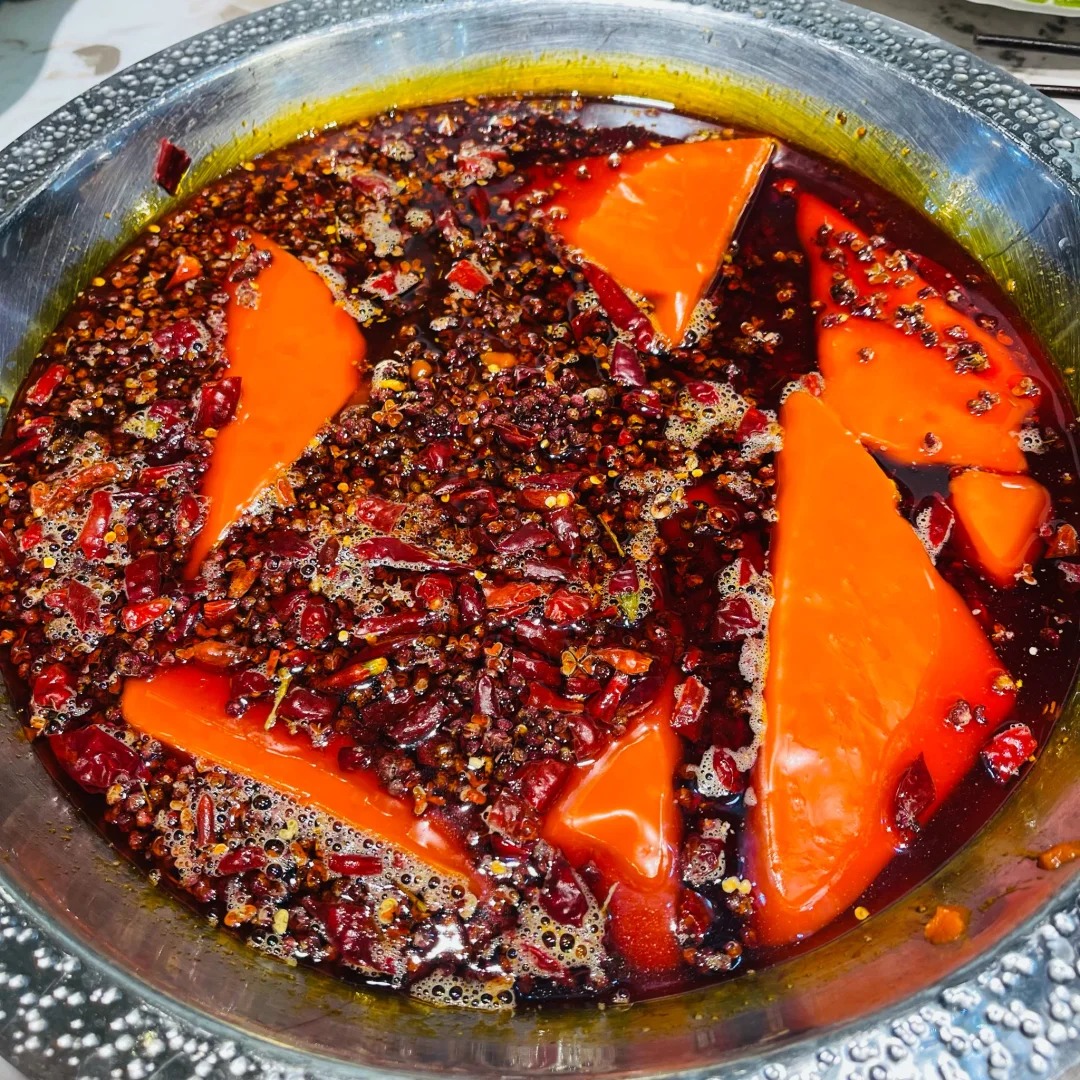
Nothing shows the city’s power of reinvention more than the story of haor-yu. The fish is actually the green-finned filefish. Big-headed, small-bodied, with a strong smell, it once struggled to sell along the coast. Before modern cold chains, the fish traveled upriver skinned and headless, frozen into hard blocks. In Chongqing, it was reborn. With wide oil and high heat, with pickled chiles and ginger shreds, with dry-pot and water-boiled techniques, the fish lost its ocean funk and kept what mattered—fine texture, firm bite, boneless ease, and an ability to simmer without falling apart. Locals nicknamed it “haor-yu” because the skinned, headless shape resembled a little rat. The origin washed away, the taste turned unmistakably Chongqing: you came here, so we’ll make it delicious our way.
Xiaomian: Hotpot Is the Face; Xiaomian Is the Heart
Even more legendary is xiaomian. Chongqing’s humid, mountainous climate doesn’t favor wheat, yet the city fell hard for noodles and made them part of its daily rhythm—a remarkable outlier in a region of rice flours. Early “little noodles” were humble: a spoon of lard, a fistful of condiments—Fuling zhacai, Zigong ya cai, peanuts, sesame paste, soy sauce, scallion, ginger water—and a final soul-stirring ladle of red oil. Very quickly, xiaomian became a platform. Pea & pork noodles, pork-intestine noodles, zhajiang noodles, beef noodles, eel noodles, even “twice-cooked-pork” noodles—Chongqing’s favorite flavors and techniques all found a way to ride on top of that bowl. People like to say: hotpot is the city’s face, xiaomian its heart—behind the public heat lies an everyday bowl you can grab anywhere, anytime.

A City’s Beef Affection: “No Beef, No Banquet”
In many agrarian cultures, cattle pull plows before they appear on plates. In Chongqing, “no beef, no banquet” feels perfectly natural. The buttery softness of braised “ya” beef, the translucent crisp of paper-thin “lantern-shadow” beef, the tang of sour-broth beef, the blaze of water-boiled beef, the sweet freshness of hotpot beef—layer upon layer. It reads like jianghu cuisine—bold, fast, swaggering—and like the steadfast taste a Chongqing expat longs for most.
The Flavor Puzzle After “Hunan and Canton Fills Sichuan
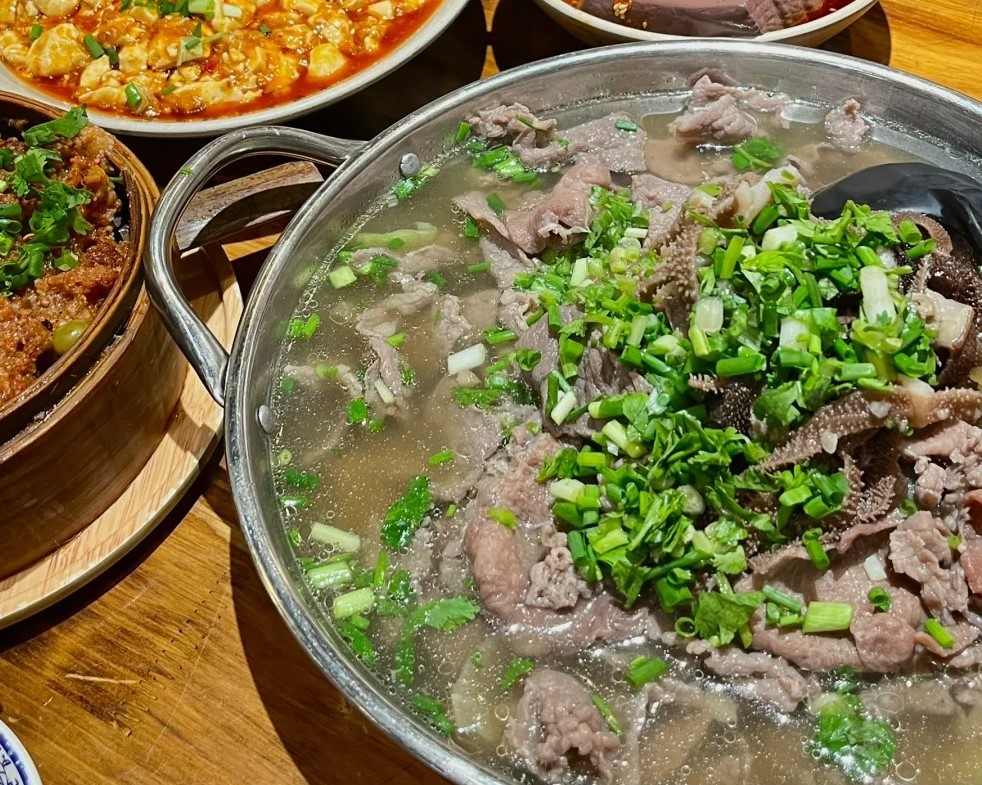
The great waves of migration in the Ming-Qing period transformed the Sichuan Basin’s languages and customs, and made Chongqing’s table radically inclusive. Taro chicken echoes Hunan-style seasonings; “fire-fried” eel nods to Hubei methods; Qianjiang mixed chicken offal recalls peppery versions in northern Guangxi; the Chongqing grilled fish you see everywhere shares DNA with grills across the Southwest. The exact lineages are often untraceable, but the pathway is clear: adopt, adjust, Chongqing-ize. The city doesn’t ask where a dish comes from—only whether it eats well. That openness is why “Yu cuisine” travels so well and why Chongqing people feel at home adapting their palates wherever they go.
Treaty-Port Encounters and Modernity
Late-19th-century opening turned this inland city outward. Rough dockworkers slurped old-broth hotpot without changing the base and ate tofu-pudding with rice; foreign consuls and merchants dined on steaks, coffee, and cakes. Two perfected but incompatible dining worlds suddenly collided in the mountains. Streets, buildings, and commerce reshaped accordingly. During the war years, when Chongqing served as China’s wartime capital, elite institutions and international missions gathered here. Those layers of history broadened the city’s palate. You can still find the polish of rose-syrup ice jelly and the street-shouted sweetness of fried mahua; you can taste a refined system of braises and the humblest, most ubiquitous jar of Fuling zhacai. That paradox—elegant versus everyday—sits comfortably on the same table.
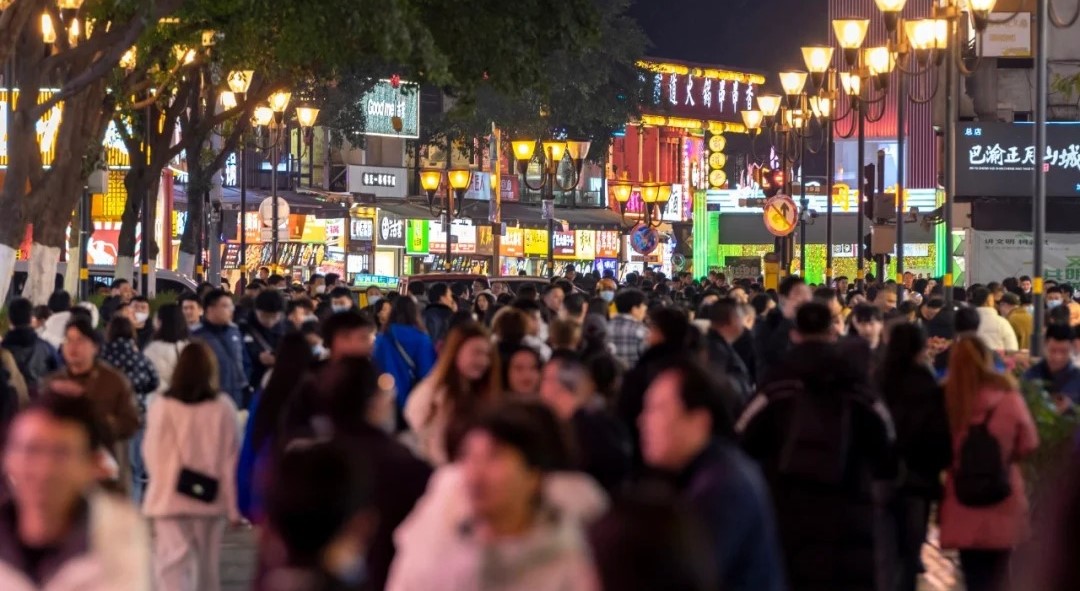
Night-Market
Today Chongqing holds two clear dining profiles. One is the growing world of streets and night markets—noodle stands, skewer shops, rowdy jianghu eateries—fast rhythm, huge choice, low per-meal commitment, perfect for eating where your feet take you. The other is an evolving refined scene: ingredient-driven creative menus, modern interpretations of classic jianghu dishes, tasting menus built around provenance and narrative. Local social platforms and review apps speed discovery; cold-chain logistics and better sourcing widen the ingredient radius; Chongqing’s knack for “localizing” foreign inputs turns new products into home flavors quickly. In a short ride you can bounce from Jiefangbei to Guanyinqiao, or switch scenes between Nan’an and Ciqikou: two worlds a few stops apart, both unmistakably Chongqing.
How to Eat the City
If you want to “eat the city,” start with time and people. On weekdays, watch where nearby office workers go for lunch; on weekends, look where families and friends gather for dinner. Use local tools to refine your search: in Dianping, filter by district first, then by cuisine, then validate with scores and photo-rich reviews from the last six months. For street foods, read foot-traffic and turnover speed; for refined restaurants, check reservation systems and the story the menu tells. About heat levels, start with mild to medium and then dial up. Don’t test your spice ceiling at the densest tourist spot—that’s experience talking, not timidity.
Related blog posts

Taste Guangzhou — why this city eats like nowhere else in China
Guangzhou food guide | Cantonese cuisine, dim sum, Chaoshau & Shunde flavours — history, culture and what to try

Taste of Shanghai: Best Food to Try in Shanghai
A traveler’s guide to Shanghai cuisine — seafood seasonality, classic snacks, modern twists, and where to taste them.